
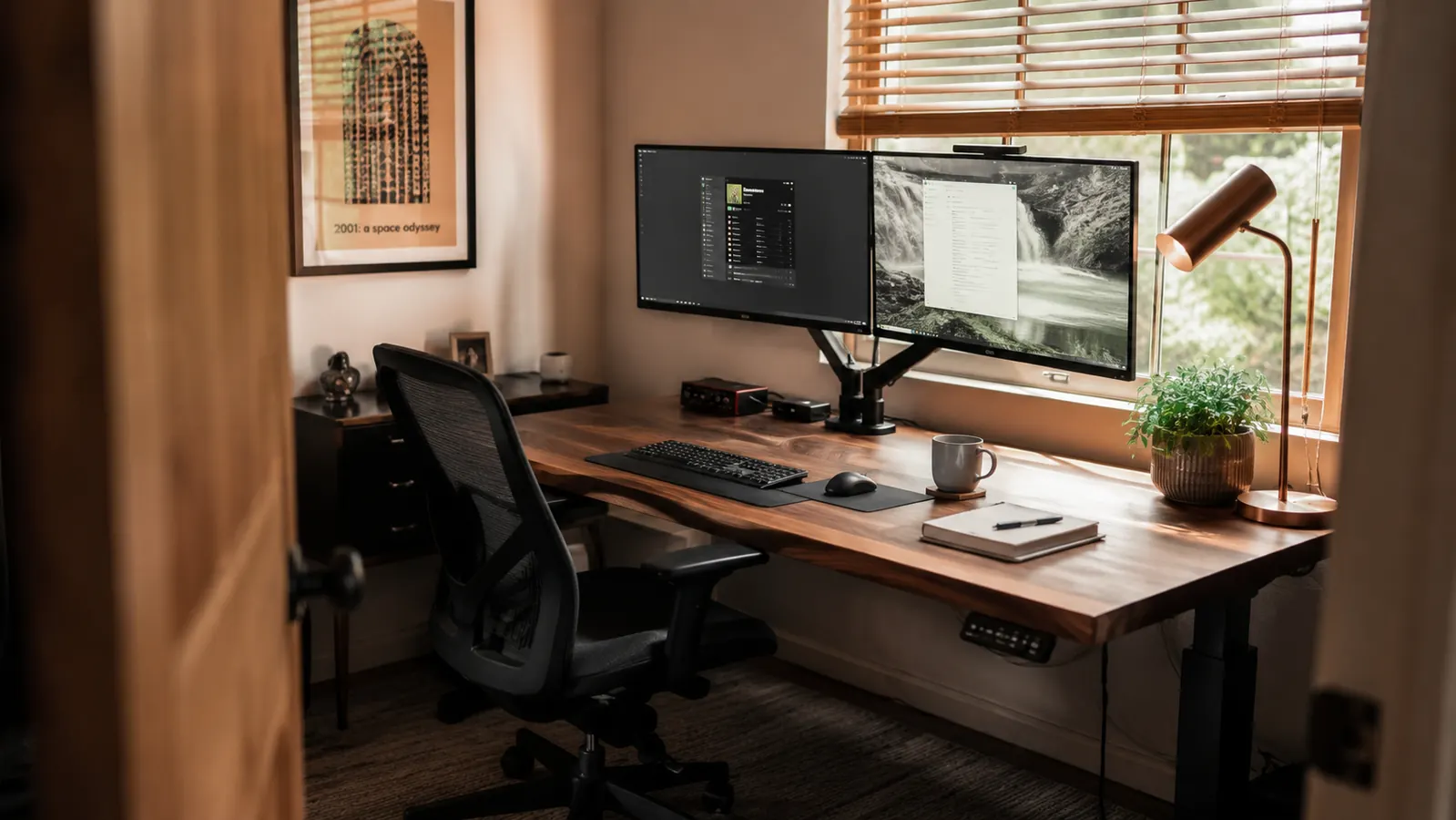
I didn't think a monitor stand could fix a neck ache that had been building for three years, but that's exactly what happened at my desk in the spare bedroom here in Boise. My old setup had two monitors sitting flat on cheap plastic risers, tilted back so far I had to duck my chin down just to read email. By four in the afternoon my neck would lock up right at the base of my skull, and I'd spend the last two hours of most workdays rubbing it with one hand while I typed with the other.
What actually pushed me to change anything wasn't the pain, though. It was running out of desk. Between a laptop, two monitor bases, a mouse pad, and whatever coffee mug I hadn't washed yet, I had maybe eight inches of open surface left for a notebook or a keyboard tray. My spare bedroom is small, the desk in it is smaller, and I was tired of shuffling things onto my lap just to write a note. I started looking at monitor arms instead of risers, and the VIVO dual monitor desk mount kept coming up as the one people working from small rooms actually kept, instead of boxing it back up and returning it.
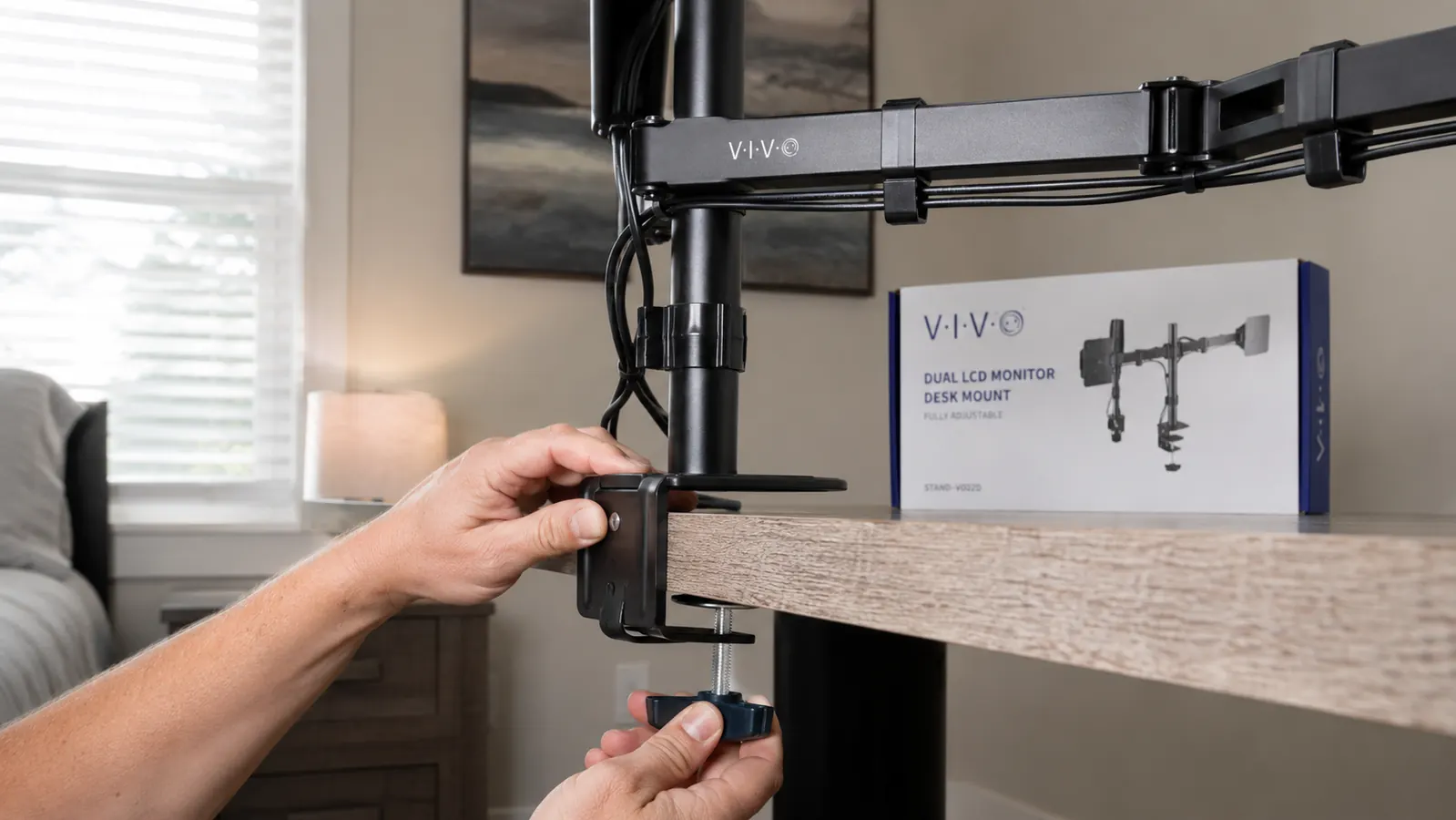
I clamped the VIVO mount to the back edge of my desk on a Saturday morning before anyone else in the house was awake. The desk is just under an inch thick, which is right in the range the C-clamp wants, so I never needed the grommet hole option, though it's there if your desk calls for it. Whole install, both arms, both monitors remounted onto the VESA plates, took about twenty five minutes and one trip downstairs to find the right screwdriver.
The part that actually mattered happened the moment I lifted both screens off the desk. The risers were gone, the cables were pulled up and clipped along the arm instead of pooling on the desktop, and I had real desk surface again for the first time since I moved into this room. I pulled the arms toward me and set the top of each screen right at eye level, which is something a fixed riser never let me do, since risers only go up, they don't come toward you or drop down.
The moment I lifted both screens off the desk and onto arms, I got back nearly a foot of surface I hadn't had in years, and my neck finally stopped bending down to meet the screen.
Stop Bending Your Neck Down to a Screen That Should Meet You Halfway
If your monitors are sitting low and your desk is buried under risers and cables, the fix isn't a new desk. It's getting the screens up to eye level and off the surface entirely. That's the whole job of an arm mount like this one.
Amazon Check Today's Price on Amazon →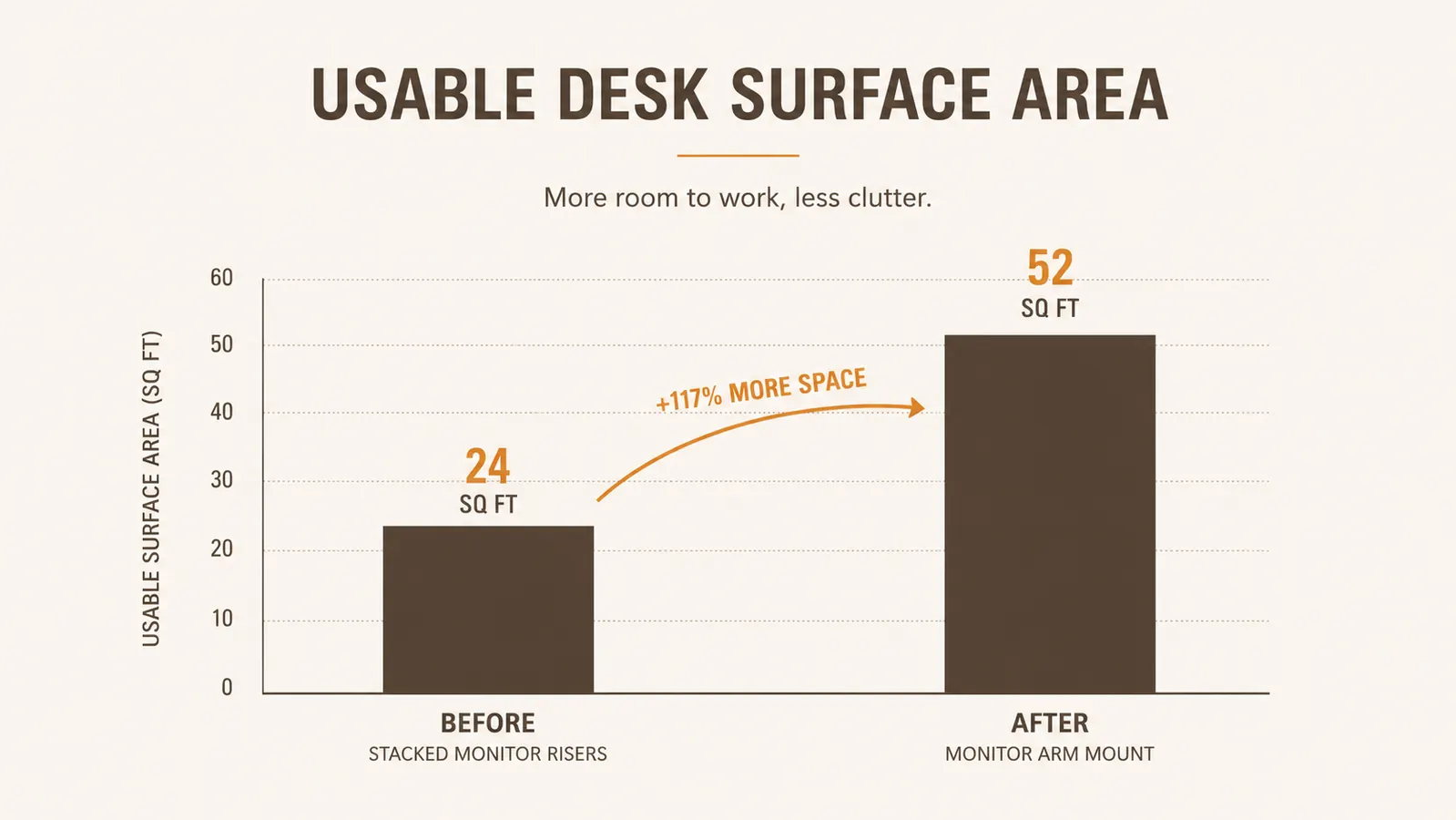
Three months in, the difference isn't subtle. I sit up straighter without thinking about it, because the screens are where my eyes naturally land instead of six inches below. The neck ache that used to show up like clockwork around four o'clock has mostly stopped. I still get tight some days, usually after I've been hunched over reading something small, but it's nothing like the daily grind it used to be.
I'm not going to pretend the VIVO mount is flawless. The weight limit is 22 pounds per arm, and my older 27 inch monitor came in right at the edge of that, close enough that I double checked the spec sheet twice before I trusted it. Push the arm all the way out to its farthest reach and you'll get a little wobble if you bump the desk, nothing dramatic, but I noticed it. I wrote up the small stuff like that in more detail in my honest review, because a few of those tradeoffs are worth knowing before you clamp one to your own desk.
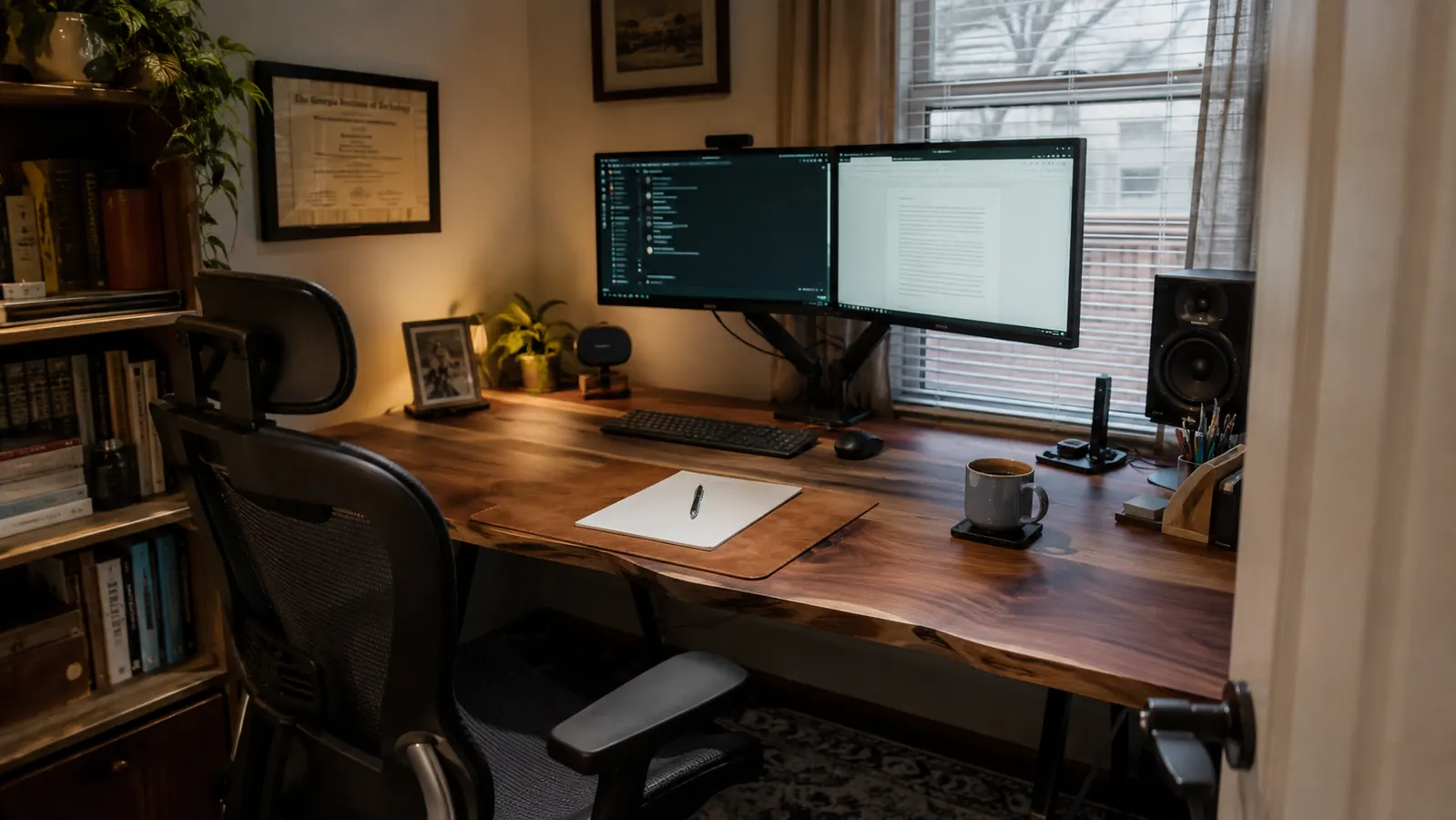
The desk space is the part that surprised me most. I didn't buy this thing thinking about surface area, I bought it for my neck. But getting both monitors up off the desktop and onto arms cleared enough room that I finally have a spot for a notepad and my kids' school folders when they need help at my desk after school. Small room, small desk, and somehow more usable space than I've had in nine years of working from this spare bedroom.
I put the full six month test, weight numbers and all, in my long-term review if you want the whole timeline. But the short version is that a flimsy plastic riser was never going to fix a problem that was really about geometry. My eyes needed the screen at a certain height and a certain distance, and no stack of risers or books was going to get me there without eating my desk alive in the process.
What I'd Tell You If We Were Sitting at My Kitchen Table
If you're dealing with a sore neck and a desk that's too crowded to think straight, I'd tell you plainly that a monitor arm is one of the few upgrades I've made that solved two problems with one purchase. I wouldn't tell you it fixes everything, my chair still matters and so does how often I get up and walk around. And I'd tell you to actually measure your desk thickness and your monitor's VESA mount before you order anything, because that's the one step people skip and then end up frustrated over something that was never the mount's fault to begin with. But if your screens are sitting too low and your desk is too full, the VIVO mount is the honest fix I'd point you toward, not because someone paid me to say it, but because it's still bolted to my desk nine months later and I haven't thought about replacing it once.
Get Your Screens to Eye Level and Your Desk Back
Nine months of daily use, still holding, still clamped to the same desk. If a crowded surface and a stiff neck sound familiar, this is the fix I'd point you toward first.
Amazon Check Today's Price on Amazon →