
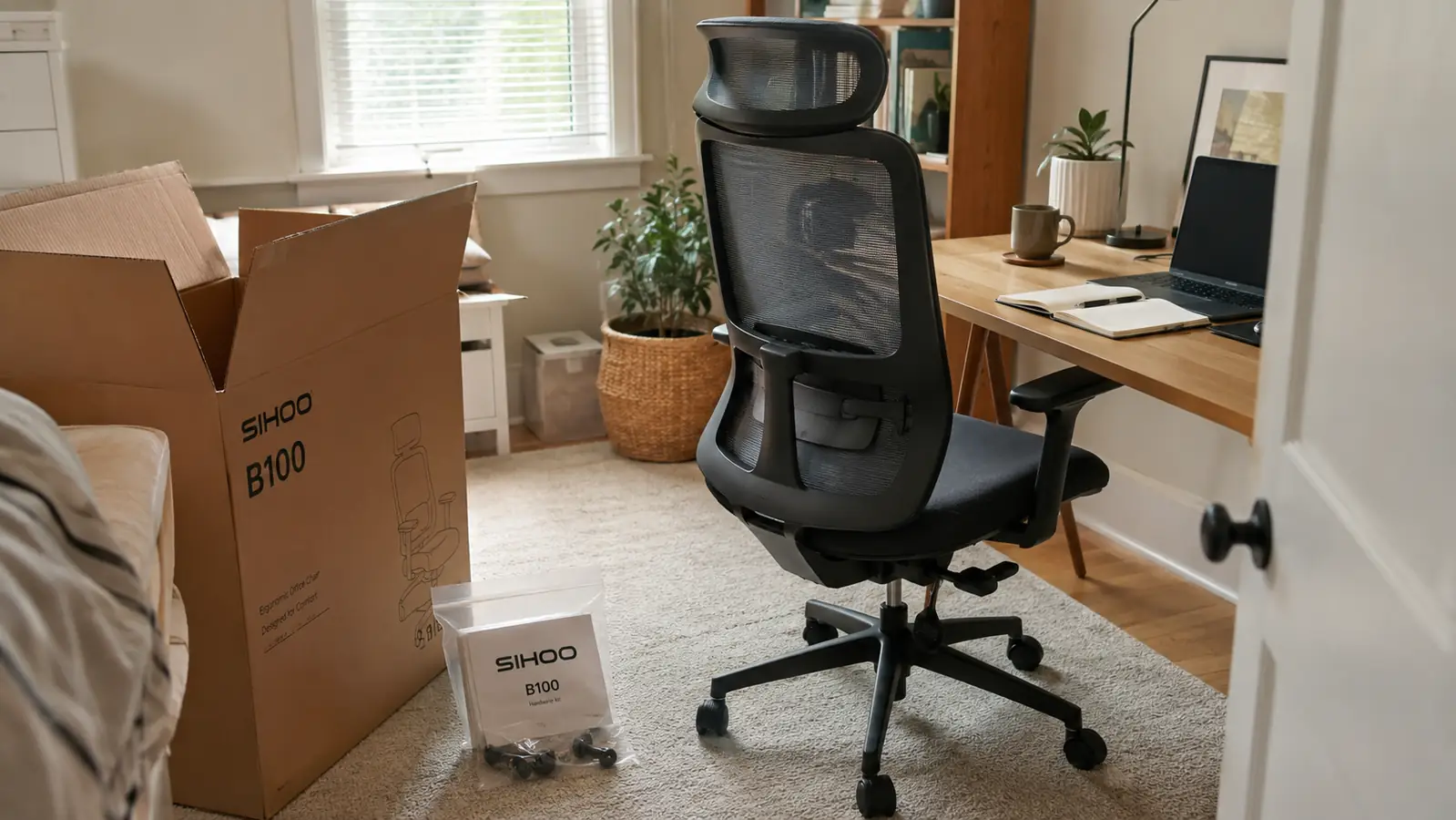
When I ordered the SIHOO B100, I did what most people do. I scrolled through the Amazon photos, read the top ten reviews, and pictured exactly the chair I was about to unbox. What actually showed up on my porch in Boise was close to that picture, but not identical to it, and nobody selling the chair is going to walk you through the gap between the listing and the reality. I already wrote a full four-month log of how the SIHOO B100 held up for my back over a long haul, over at my long-term SIHOO B100 review, but this piece is different. This is the stuff I noticed in the first two weeks that the marketing copy skips over entirely, the assembly quirks, the sizing surprises, and the reasons I've seen other buyers send this chair back.
I want to be clear up front that I still use this chair every day and would buy it again. But honest means something specific to me: I'm not going to pretend every part of owning a SIHOO B100 was smooth just because the core lumbar system works. A decent chunk of the lower-starred reviews on this chair aren't about comfort at all, they're about assembly frustration, a squeak that shows up out of the box instead of after months, or a size expectation that didn't match the photos. If you're on the fence about ordering one, I'd rather tell you about those than pretend they don't exist.
The Quick Verdict
A genuinely capable mesh chair once you get past a real assembly learning curve and a few sizing surprises the listing photos gloss over. Worth it, but go in with accurate expectations.
Amazon Check Today's Price →Wondering if the SIHOO B100 lives up to the listing photos?
It mostly does, once you know what to expect going in. Check today's price and current availability on Amazon before you decide.
Amazon Check Today's Price on Amazon →How I Set Mine Up At Home
The box the SIHOO B100 ships in is heavy and awkward for one person, close to fifty pounds by my rough guess, and mine arrived with a corner slightly crushed from freight handling. Nothing inside was damaged, but if you live somewhere deliveries get left outside for a while, know that you're going to want to bring this one in as soon as it lands. I cleared floor space in my spare bedroom before I even opened the box, because laying out the base, the casters, the gas lift, and the seat and backrest assembly takes more room than you'd think from the product photos, which only ever show the finished chair.
Assembly itself took me closer to an hour, not because any single step is hard, but because the SIHOO B100's hardware bag mixes several similar-looking screws and I kept second-guessing which length went where. The included tool is basic and my hands cramped up before I finished tightening the base. I also had to go back and retighten the armrest bolts a few days later because they'd loosened slightly with regular use, something the instructions don't warn you about. None of this is a dealbreaker, but if you're expecting a fifteen-minute build the way some listings imply, budget more patience than that.
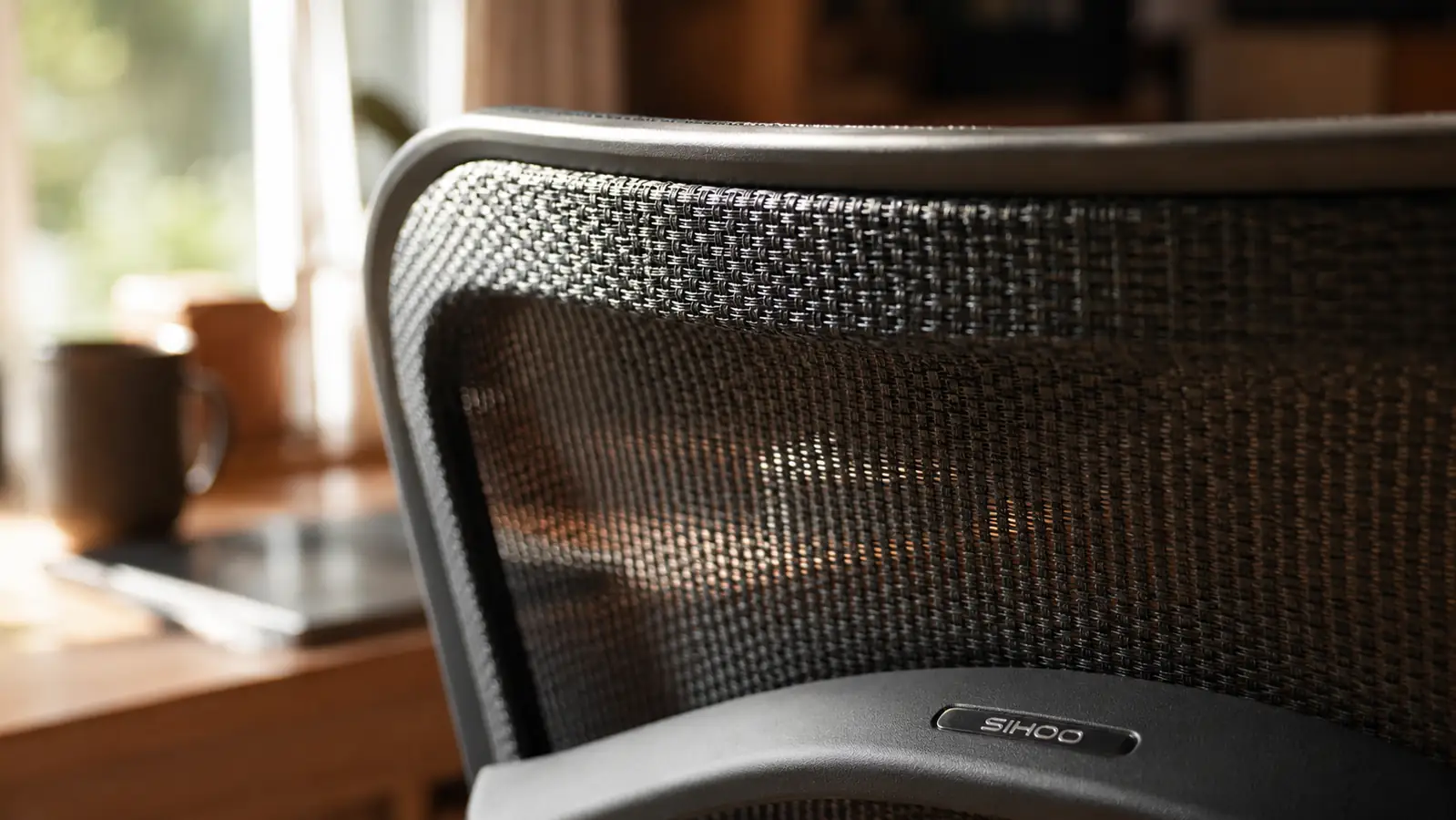
Once assembled, the SIHOO B100 felt sturdier than I expected for its weight class, and the base didn't wobble on my hardwood floor even before I'd sat in it. The mesh has a slightly rougher texture in person than it looks in the listing photos, more like a fine window screen than the smooth fabric mesh you might picture. It's not uncomfortable, but if you're picturing something silky against bare arms in summer, adjust that expectation now.
What the Amazon Photos Don't Show You
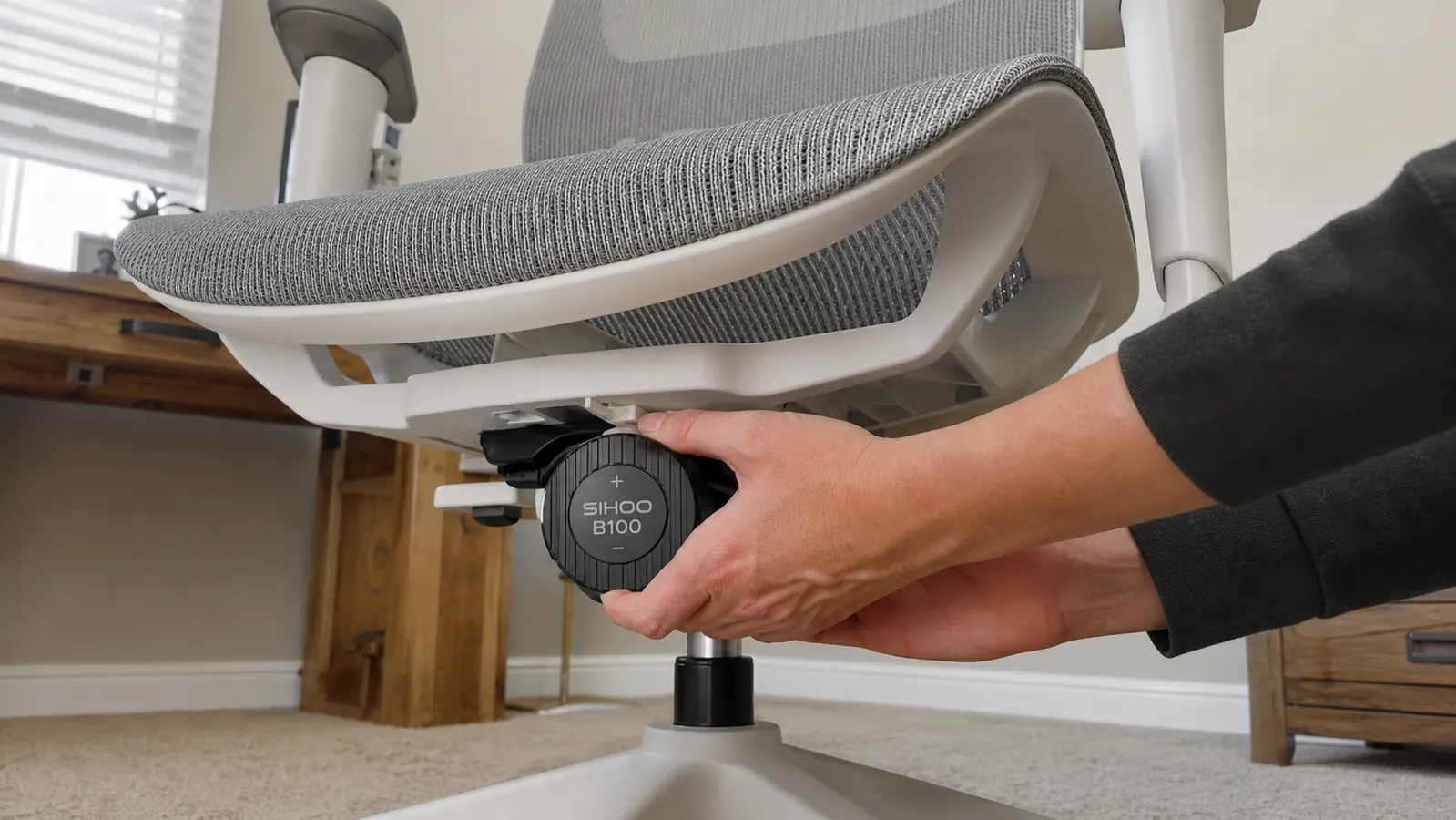
The grey mesh on my SIHOO B100 reads a shade cooler in person than it does on screen, closer to a dove grey than the warmer stone grey in some of the listing images. That's a minor thing, but if you've picked a specific color to match a room, know that monitor calibration is doing some of the selling for you. The frame plastic also has a slightly matte, almost chalky finish rather than the glossy black you'd expect from the photos, which I actually prefer since it hides fingerprints better than a shiny finish would.
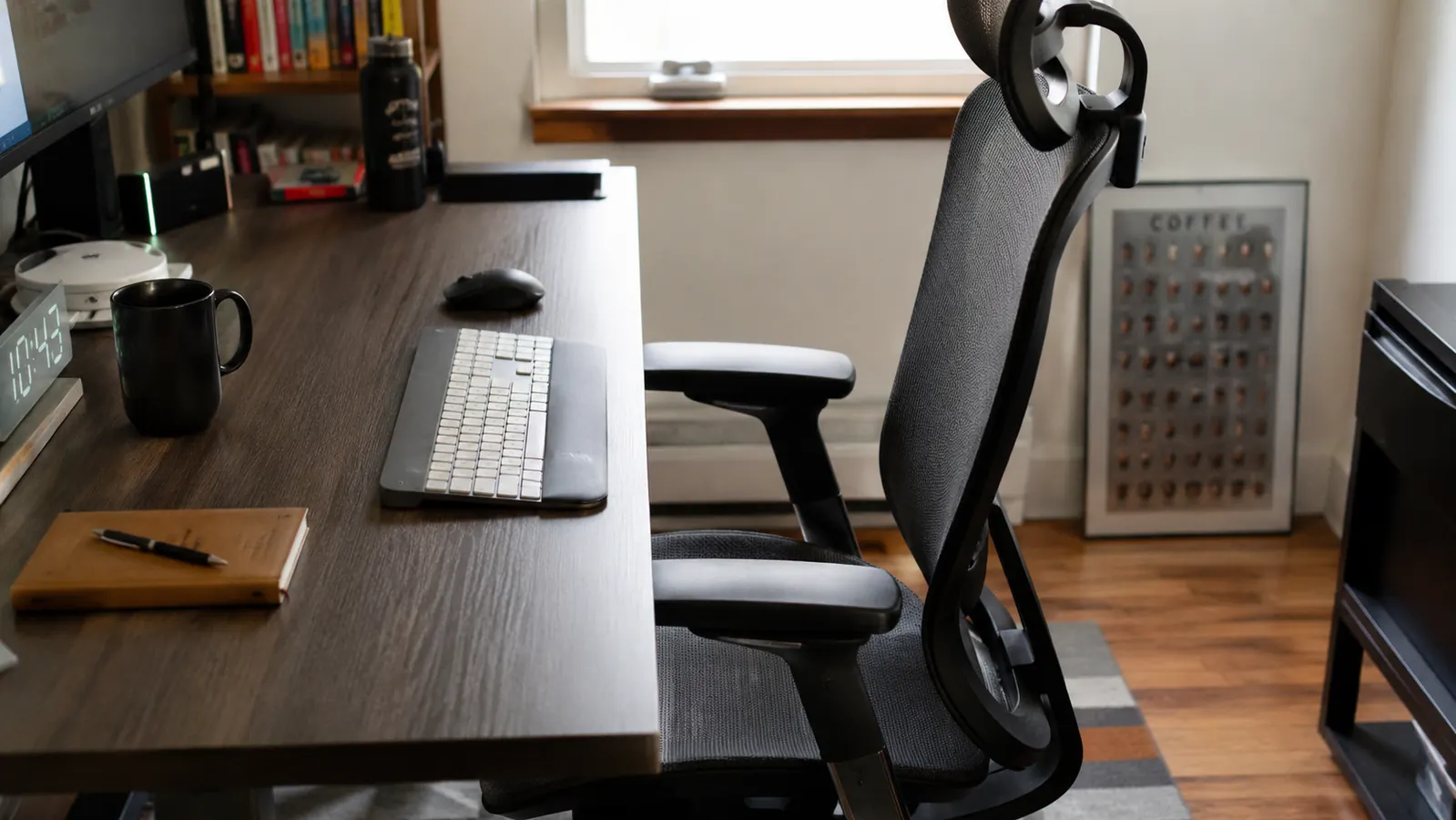
My spare bedroom office is small, and the SIHOO B100 takes up more floor space than the listing photos suggest, mostly because of how far the armrests and the wide headrest extend outward. Rolling it fully under my laminate desk means the armrests catch the desk lip unless I raise them slightly first. If you're working in a tight corner setup like mine, measure your actual clearance before ordering rather than eyeballing it against a photo shot in a spacious showroom.
The armrests look padded and forgiving in the photos, and they do adjust in height, width, and pivot, which is genuinely useful. But the padding itself is firmer than it looks, closer to a dense foam than the plush cushioning the product images imply. I noticed this most in the first week before I got used to it. It's not a flaw exactly, more a case of the photos doing what photos do, which is make everything look softer than it actually is.
Why the Return Rate Isn't Zero
No chair keeps a perfect return record, and the SIHOO B100 is no exception. Reading through the lower-starred reviews before I bought mine, a pattern showed up that matched some of what I ran into myself: buyers on the lighter or smaller end of the size range sometimes find the seat pan firmer than expected, since the cushioning is built to hold up under heavier daily use rather than to feel plush on day one. If you're used to an overstuffed cushion, the first sit might feel less forgiving than you pictured, even though it does break in some over the following weeks.
The wide headrest is another spot people misjudge. It adjusts up and down, but not forward or backward, so if your neck sits further back than average, the headrest can end up feeling like it's not quite reaching you rather than cradling your neck the way the marketing photos suggest. I run into this exact issue on days I lean back further than usual, and I've just learned to tilt the whole recline a bit further to close the gap instead of expecting the headrest itself to move.
A smaller number of reviews mention a squeak or creak straight out of the box, before any real break-in period, which is different from the slow, months-later squeak I described in my longer-term writeup of the SIHOO B100. Mine didn't do this, but if yours does on arrival, it's worth checking that every bolt is fully seated before assuming it's a defective unit. A few turns with the included tool solved it for other buyers I've read about, and it's worth trying before requesting a replacement.
Weight capacity questions come up in the reviews too, and I put mine to a real test when a friend who's built heavier than I am sat in it for an afternoon while helping me rearrange the office. He didn't feel like he was near any limit, and the base held steady with no creaking under his weight, but he did mention the seat pan felt shallower for his frame than a chair built specifically for larger users would. If you're shopping at the upper end of the stated capacity, that's worth weighing alongside the price, since a chair rated to hold you isn't always a chair built around you.
Adjustments That Actually Matter
After two weeks of daily use, I'd tell any new SIHOO B100 owner to spend real time on three adjustments before judging the chair at all: the lumbar dial, the seat depth slider, and the tilt tension knob underneath the seat. That last one is easy to miss entirely, it's tucked low and doesn't get much attention in the included instructions, but it controls how much resistance you feel when you lean back, and getting it wrong makes the recline feel either too stiff or too loose. I had mine set too loose for the first several days and assumed the recline mechanism was just built that way, until I found the knob and tightened it.
The adjustments that matter less than you'd expect are the armrest pivot and the headrest height, at least for my body type. I set both once in the first sitting and never touched them again, while the lumbar dial and seat depth needed small revisits over the following month as I figured out my actual preference rather than my guess on day one. If you're short on setup time, prioritize the lumbar and seat depth first and treat the rest as optional for now.
The First Two Weeks vs Now
The break-in period is real, and it's the part most listings skip entirely. The seat felt firmer than I expected for the first several days, exactly the sensation some of those lower-starred reviews describe, and I found myself doing a lot of small position shifts while my body adjusted to actual support instead of the give of a worn-out old cushion. That firmness never fully disappears, the seat isn't going to turn plush, but it does feel less noticeable by the second week once you stop comparing it to whatever chair you're replacing.
The mesh texture I mentioned earlier also stopped registering as rough once I'd been sitting on it daily for a couple of weeks. I think part of that first-week impression comes from expecting fabric based on the photos and getting something closer to a tight woven screen instead. By week three I wasn't thinking about the texture at all, which tracks with almost everything else about the SIHOO B100 that felt slightly off on day one and then just became normal once my hands and back adjusted to what was actually there instead of what I'd pictured.
The casters were the one part that impressed me immediately and stayed impressive. They rolled smoothly on my hardwood from the first day and haven't picked up the sticky drag some cheaper casters develop after a few weeks of use. If you're moving between a desk and a side table the way I do throughout the day, that's a small detail that ends up mattering more than the spec sheet would suggest.
What I'd Tell a Friend Before They Click Buy
If a friend asked me straight out whether to buy the SIHOO B100, I'd say yes, but I'd also tell them to read the return policy before ordering, not after a problem shows up. I'd tell them the assembly takes real time, the mesh texture is a little rougher than it looks online, and the headrest won't reach everyone's neck the same way. None of that changed my mind about keeping mine, but going in with accurate expectations would have saved me a little bit of first-week frustration that had nothing to do with how the chair actually performs over time.
If price is the main thing holding you back, it's worth seeing how the SIHOO B100 actually stacks up against a much pricier option before assuming the gap is as wide as the price tags suggest. I put that side by side in this SIHOO B100 vs Herman Miller comparison, and the honest answer surprised me a little. For most home offices, the case for the splurge is thinner than it sounds.
What I Liked
- Solid, non-wobbly base once fully assembled and every bolt is properly tightened
- Lumbar dial and seat depth slider genuinely change how the chair fits once dialed in
- Mesh holds up well over time despite feeling rougher than the photos suggest at first touch
- Armrests adjust in height, width, and pivot, more configurable than most chairs in this range
- Casters roll smoothly on hardwood from day one and haven't developed drag
- Matte frame finish hides fingerprints better than a glossy finish would
Where It Falls Short
- Assembly hardware bag mixes similar-looking screws and took me closer to an hour than the listing implies
- Headrest only adjusts for height, not depth, so it doesn't reach every neck the same way
- Seat cushion feels firmer on day one than the product photos suggest, especially for lighter body types
- Color reads a shade cooler in person than in some listing photos
- A minority of buyers report an out-of-the-box squeak that needs a bolt check rather than a replacement
- Armrest bolts loosened slightly within the first week and needed retightening
The photos make everything look softer, roomier, and simpler to build than it actually is. None of that is a dealbreaker, but going in blind is how a good chair ends up as a return.
Who This Is For
The SIHOO B100 is a good fit if you're willing to spend real time on setup and adjustment before judging it, and if you value a lumbar system that actually moves over a chair that just looks supportive in a photo. It's also a solid pick if you've read enough of the lower-starred reviews to go in with realistic expectations about assembly and texture rather than expecting a plush, box-fresh feel on day one. Give it those first two weeks before deciding how you feel about it, since that's when most of my early complaints quietly disappeared on their own.
Who Should Skip It
If you want something you can unbox and sit in within ten minutes with zero adjustment, or if a headrest that reaches every angle of your neck matters more to you than lumbar support, this might not be the chair for you. I'd also skip it if you're not willing to double check bolts in the first week, since a few extra turns with the included tool solves most of the early squeak complaints I've read about, but only if you're willing to do that small bit of maintenance yourself rather than expecting a flawless chair straight out of the box.
Know the tradeoffs going in, and the SIHOO B100 delivers
The assembly takes patience and the texture isn't what the photos show, but the lumbar support and build quality held up for me. Check today's price on Amazon before you decide.
Amazon Check Today's Price on Amazon →