
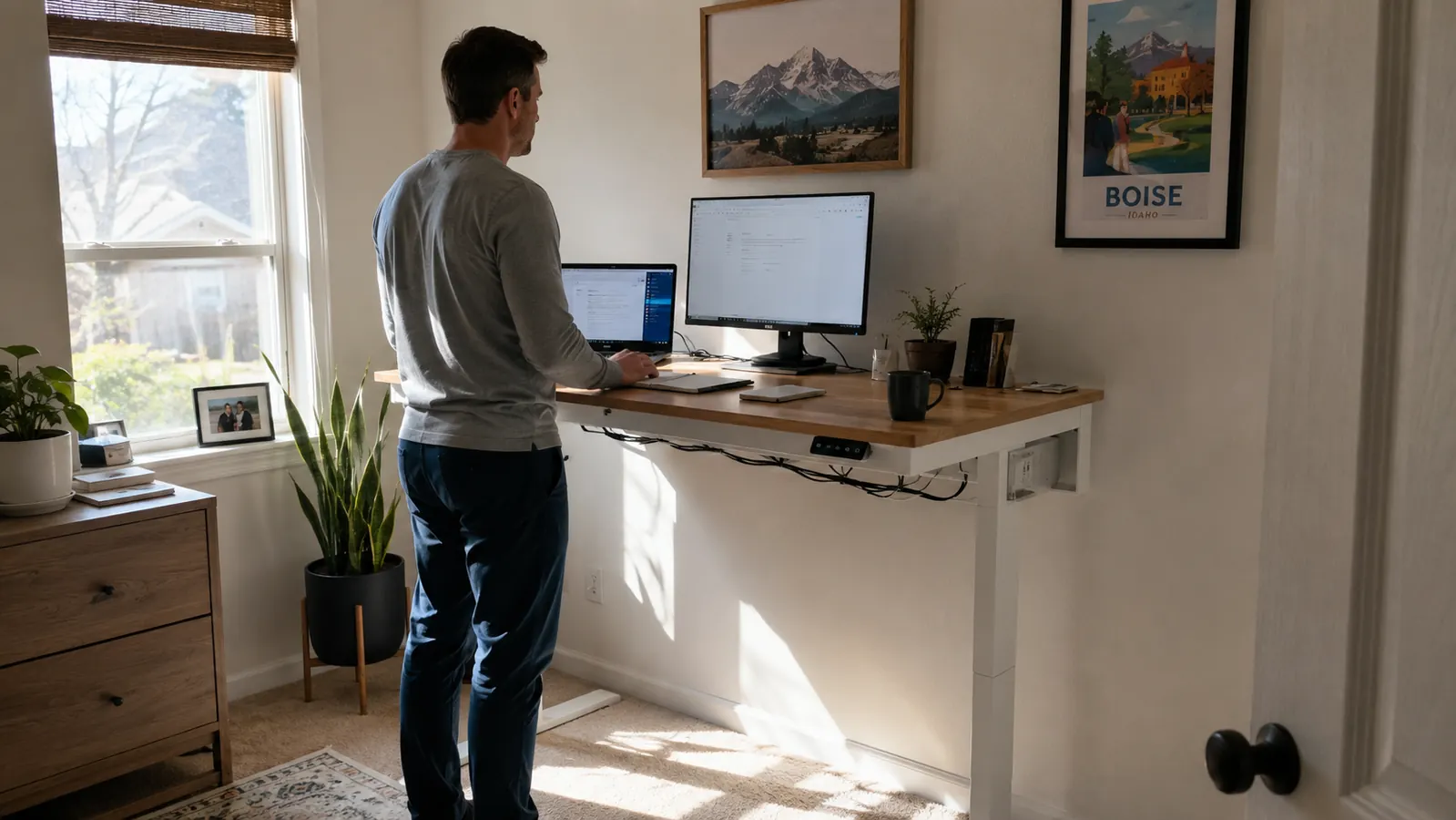
Three months ago I bolted together a FEZIBO electric standing desk in the same spare bedroom in Boise where I've worked from home for nine years. I've cycled through four desks in that room: a hollow particleboard job from a big-box store that sagged in the middle by year two, a glass-top desk that showed every fingerprint and cracked when my toddler leaned on it, a fixed-height desk I built from a door blank and sawhorses, and now this one. I'm not new to buying cheap furniture that quietly falls apart, and that's exactly why I tracked this desk closely for three months instead of writing about it after the first week the way most reviews do.
My reason for switching wasn't trendy. Most afternoons I'd get a dull ache low in my back that turned into a knot between my shoulder blades by five o'clock. A physical therapist I saw for an unrelated shoulder issue told me flatly that sitting eight hours a day in one position was probably half my problem. I didn't want a commercial-grade desk that would eat my whole home office budget. I wanted something that would actually hold up in a spare bedroom that also doubles as a guest room, and that I could raise and lower without thinking about it every time. The FEZIBO landed in my cart because of the memory presets and because the listing didn't read like it was written by someone who'd never used the thing.
The Quick Verdict
After three months of daily use, the FEZIBO holds a standing height reliably and the presets genuinely changed my habits, but the desktop still has a noticeable wobble at full extension and one of the leg covers came loose in month two.
Amazon Check Today's Price →Still doing the sit-all-day thing? That's the one habit worth breaking first.
I put off a standing desk for years because I assumed it would be a hassle to use every day. The FEZIBO's presets are the reason it actually stuck for me. Check today's price and current availability before you decide.
Amazon Check Today's Price on Amazon →How I've Used It
Assembly took me a little over an hour, working alone, with the included hex key and a cordless drill for the longer screws. The instructions are picture-based and mostly clear, though I had to back out and redo one leg bracket because I'd installed it a few degrees off and the crossbar wouldn't seat flush. Nothing about assembly requires two people, but a second set of hands makes flipping the desktop over a lot easier on your back, which felt a little ironic given the whole point of the purchase.
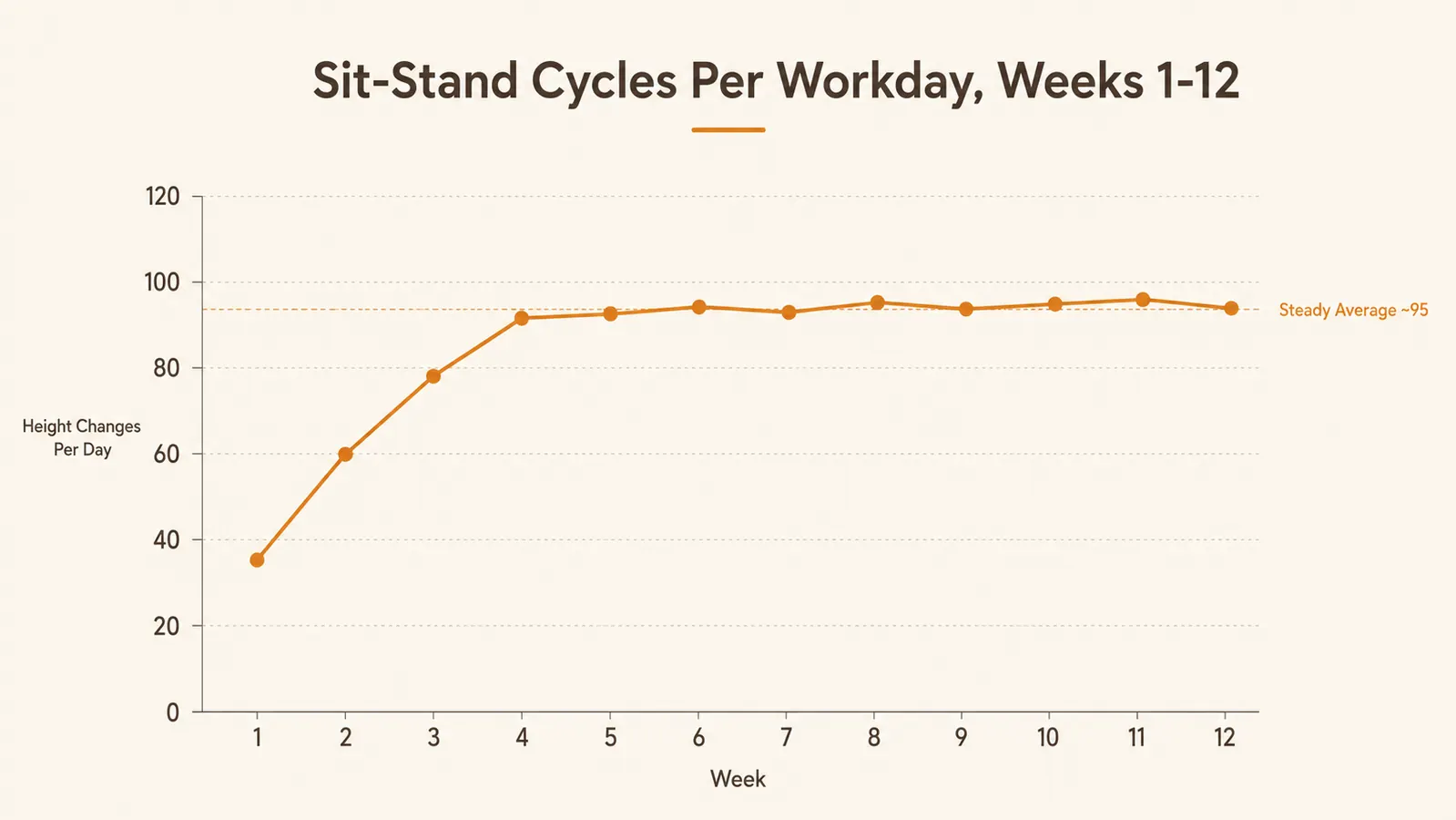
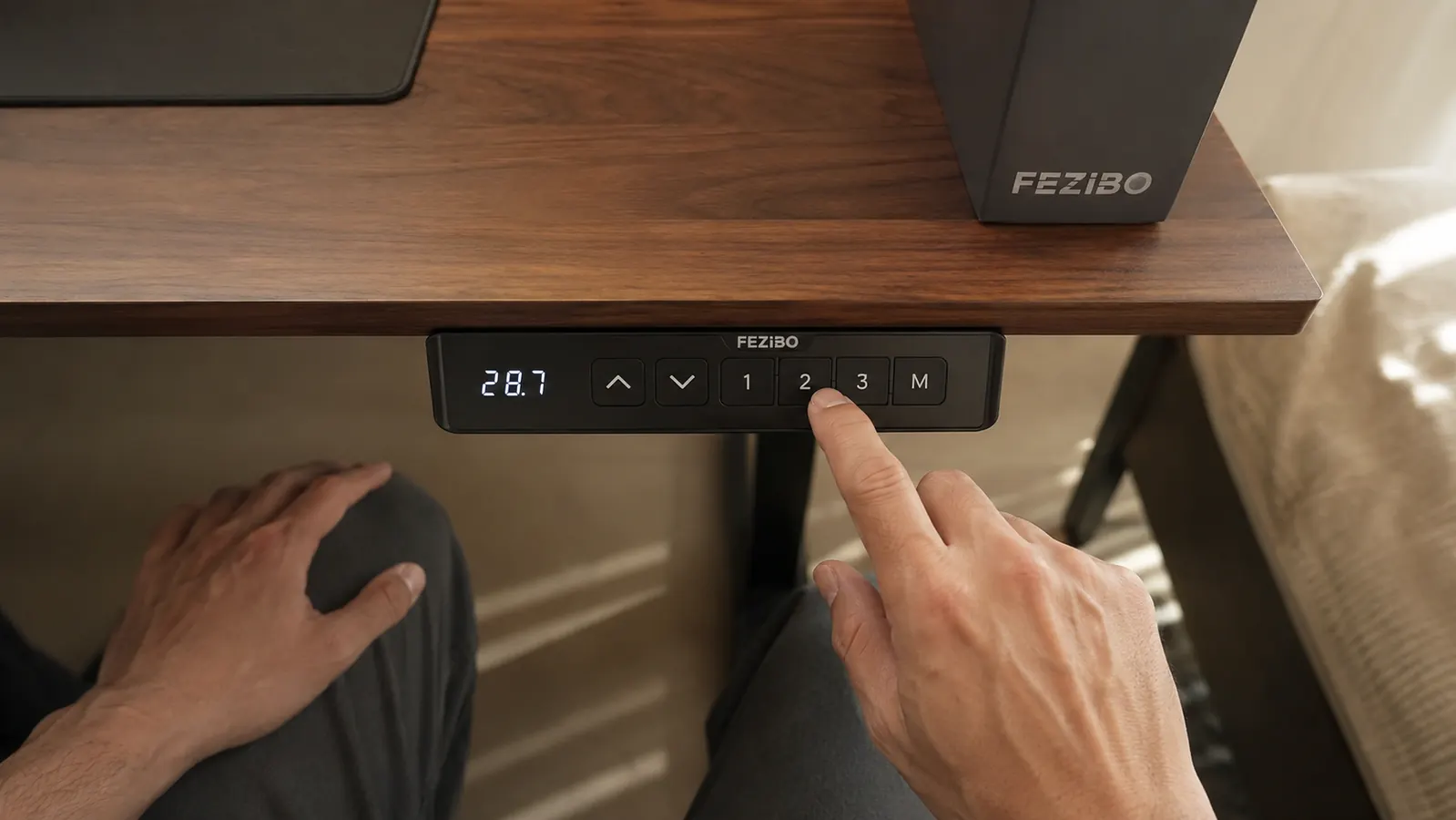
Once it was up, I set three presets right away: a sitting height for typing-heavy mornings, a standing height for calls and afternoon work, and a slightly lower standing height for when I'm sketching wireframes and want my elbows closer to the desktop. I use the FEZIBO's up and down buttons or the saved presets probably eight to twelve times a day now. That number surprised me. I expected to set it once in the morning and once in the afternoon, but once the motor made switching effortless, I started changing position every time my attention shifted, which is more often than I realized.
The motor itself has been the most consistent part of this whole desk. Three months in, it still moves from sitting to standing height in about twelve seconds, same as day one, and I haven't heard the grinding or hesitation that shows up in a lot of the one-star reviews for cheaper standing desks I looked at before buying this one. I keep a small kitchen timer mentality about it: raise, work standing for forty-five minutes to an hour, lower, sit for a stretch, repeat. That rhythm is the actual reason my back stopped aching by week three, not the desk alone, but the desk is what made the rhythm easy enough to keep.
What Held Up and What Loosened After Three Months
This is the section most reviews skip, because most reviews get written in the first week when everything is still tight and new. By week seven, I noticed the plastic leg cover on the right rear leg had worked itself loose enough to rattle slightly whenever the desk moved. It wasn't a structural issue, just a cosmetic cap that needed re-seating, and popping it back into place with a firm push fixed it. It's happened once more since, in week eleven, so I'd call it a minor recurring annoyance rather than a defect.
The crossbar bolts, on the other hand, have not budged. I checked them with the hex key at the one-month and two-month marks out of habit from past desks that loosened at the joints, and both times they were still snug. The splice board desktop, which is really two panels joined with a metal plate under the seam, has not separated or shown any gap at the seam even after three months of daily raising and lowering, which is the exact spot I expected trouble given how the last cheap desk I owned failed.
The desktop finish is where I've seen the most visible wear. There's a light scuff pattern near the front edge where my keyboard wrist rest slides back and forth every day, and a faint ring from a coffee mug I didn't wipe up fast enough in week two. Neither affects function, but if you're precious about a pristine desktop, know that a laminate surface like this one shows daily-use marks the way real hardwood wouldn't, and the way glass definitely would have shown worse.
Stability at Standing Height, Honestly
Here's my honest complaint. At full standing height, which for me is around 45 inches given I'm six-foot-one, the desktop has a noticeable wobble if I type with any real force or if my daughter bumps into it walking past. It's not a sway you'd call dangerous, and my monitor has never come close to tipping, but it's enough that I've learned to brace the desk with my knee out of habit when I lean into typing a long paragraph. At sitting height the wobble mostly disappears because the legs are less extended and the whole frame is more rigid.
I want to be fair here, because this is a common tradeoff at this price point and not unique to FEZIBO. I compared notes with a coworker who has a premium sit-stand desk that costs roughly three times as much, and hers is noticeably more rigid at full height. That's the real difference the extra money buys on the expensive desks: a heavier steel frame and dual-motor synchronization that keeps both legs perfectly matched. The FEZIBO's dual motors work fine and keep the desktop level, but the frame gauge is lighter, and you feel that at the top of its range.
If your desk setup involves a lot of typing right at maximum height, or if you're taller than about six-foot-two and regularly need the desk near its ceiling, factor that wobble into your decision. For most of my working day I sit at a mid-range height or a moderate standing height, and at those settings I genuinely don't notice it anymore.
Cable Management in a Small Room
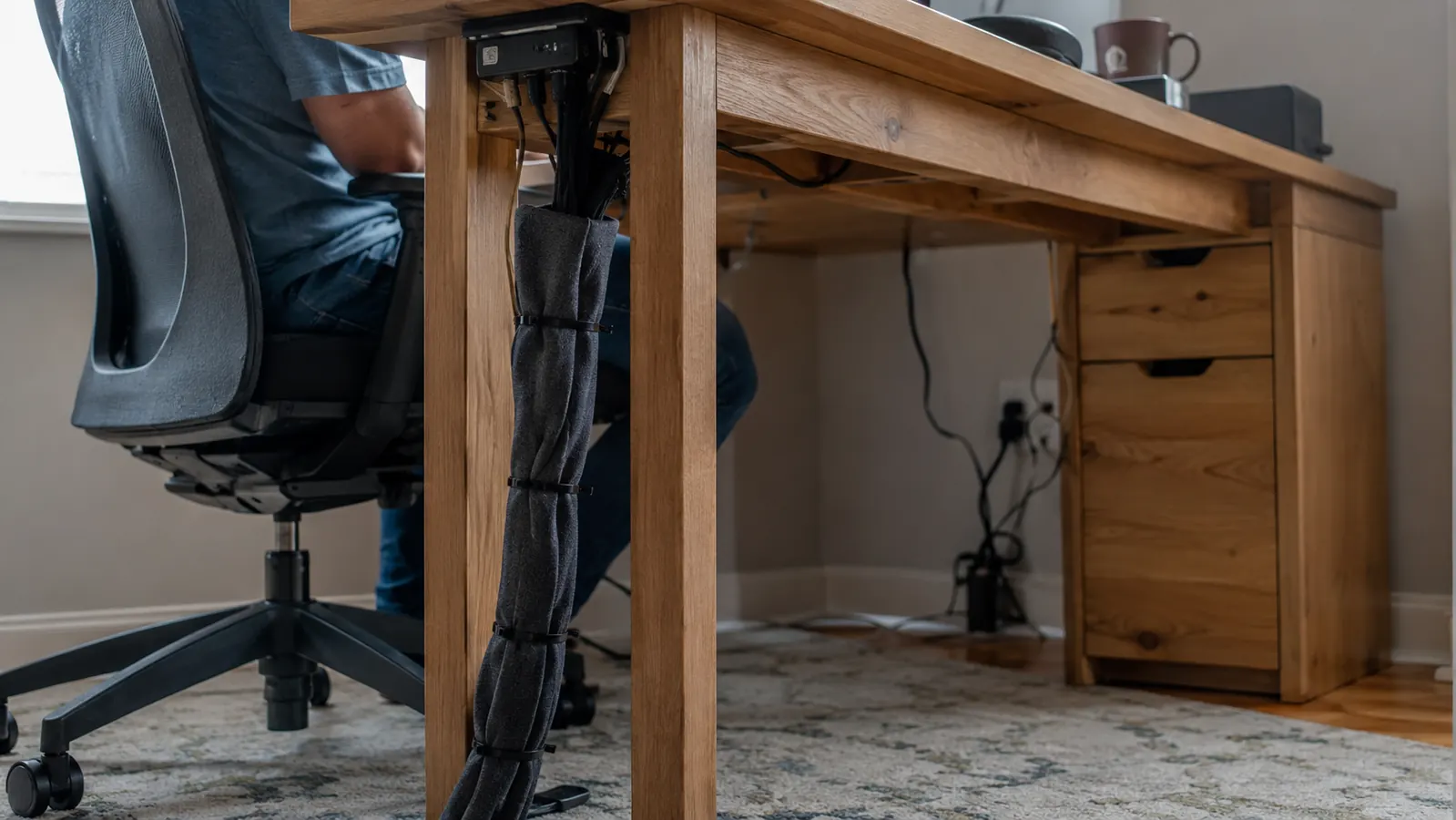
My spare bedroom is about ten feet by eleven feet, and it does double duty as a guest room, so I can't run cables the way you would in a dedicated office with wall raceways and a hidden outlet bank. A moving desk adds a wrinkle a fixed desk doesn't have: every cable that runs from the desktop down to a power strip has to have enough slack to survive a full height range without snagging on the frame or the legs.
I ended up buying a cheap cable sleeve separately and running my monitor cord, laptop charger, and a small under-desk power strip through it, zip-tied loosely along the back-left leg where it doesn't interfere with the leg's motion. It took about twenty minutes to set up properly the first time, and I've had to adjust it once since, after the sleeve started to catch slightly at the lowest sitting height. If you're in a small room like mine, budget a little extra time and maybe five dollars in cable ties for this step. FEZIBO doesn't include a cable management sleeve in the box, which is a minor miss at this price.
The Splice Board Top and Overall Build
The maple-look laminate desktop measures 48 by 24 inches, which fit my room's layout better than the 60-inch versions I initially looked at. Twenty-four inches of depth is enough for a monitor, a laptop stand off to the side, and a small notebook, but it's tight if you want a second monitor arm mounted in the middle of the desk. I'd recommend measuring your actual workflow before ordering, not just your wall space.
The white steel frame has stayed scratch-free on the visible surfaces, and the powder coat finish hasn't chipped anywhere I can see, including at the leg bases where I've bumped a rolling chair into it more than a few times. For a frame in this price range, that's held up better than I expected going in.
Was It Worth Switching From My Old Desk
I keep coming back to that hollow particleboard desk that sagged by year two, because it colors how I judge everything now. That desk cost less up front and looked fine in photos, but it lasted about eighteen months of daily use before the middle shelf visibly bowed under the weight of a monitor and a laptop dock. Judging any desk purely on the first week is how a lot of people end up buying that same mistake twice. Three months isn't a full verdict on long-term durability, but it's long enough to see past the honeymoon period, and the FEZIBO has crossed that line cleanly so far.
The bigger shift has been less about the furniture and more about my afternoons. I used to hit a slump around two o'clock where I'd start slouching, and slouching is what turned into the shoulder-blade knot by evening. Standing for even twenty or thirty minutes at that point in the day resets my posture enough that I don't slide back into the same slump. That's the part of owning a FEZIBO I didn't expect going in: it's not really a back-pain fix by itself, it's a tool that makes the actual fix, which is just moving more, something I'll consistently do instead of skip.
What I Liked
- Memory presets genuinely changed how often I switch positions, not just once a morning
- Motor speed and reliability haven't degraded at all in three months of daily use
- Splice board seam has shown zero gap or separation under regular height changes
- Powder-coat frame finish has resisted scuffs and chair bumps well
Where It Falls Short
- Noticeable desktop wobble at full standing height, worse if you're tall or type forcefully
- Right rear leg cover has worked loose twice and needs an occasional firm push back into place
- No cable management sleeve included, which matters more in a small room like mine
- 24-inch depth is tight if you want a centered monitor arm plus a laptop stand
The wobble at full height is real, but it's the honest tradeoff for a desk that costs a fraction of what my coworker paid for hers. Three months in, I'd still buy it again.
Who This Is For
If you work from a small or mid-sized room, want to actually change position throughout the day instead of setting a height once and forgetting it, and you're not regularly typing at maximum standing height for hours at a stretch, this desk fits well. The memory presets do more of the behavioral work than I expected, and that's the whole point of a sit-stand desk in the first place. If you want to dig into why alternating height helps focus and not just back pain, I wrote about that separately in 10 reasons a standing desk boosts focus at home.
Who Should Skip It
If you're over six-foot-three, do a lot of forceful typing or heavy mousing at full standing height, or you're setting up a shared workstation where the desk gets bumped often by kids or pets, the wobble I mentioned will bother you more than it bothers me. In that case, a heavier-gauge premium frame is probably worth the extra money. I go into more of the quirks I didn't expect, including a few things I only noticed after month two, in the companion piece: the honest FEZIBO review covering setup and real-world wobble.
Three months in and I still reach for the presets every single day.
That's the real test for me. If a piece of furniture is still part of my daily routine after the new-purchase excitement wears off, it earned its spot. Check today's price on Amazon before it changes.
Amazon Check Today's Price on Amazon →