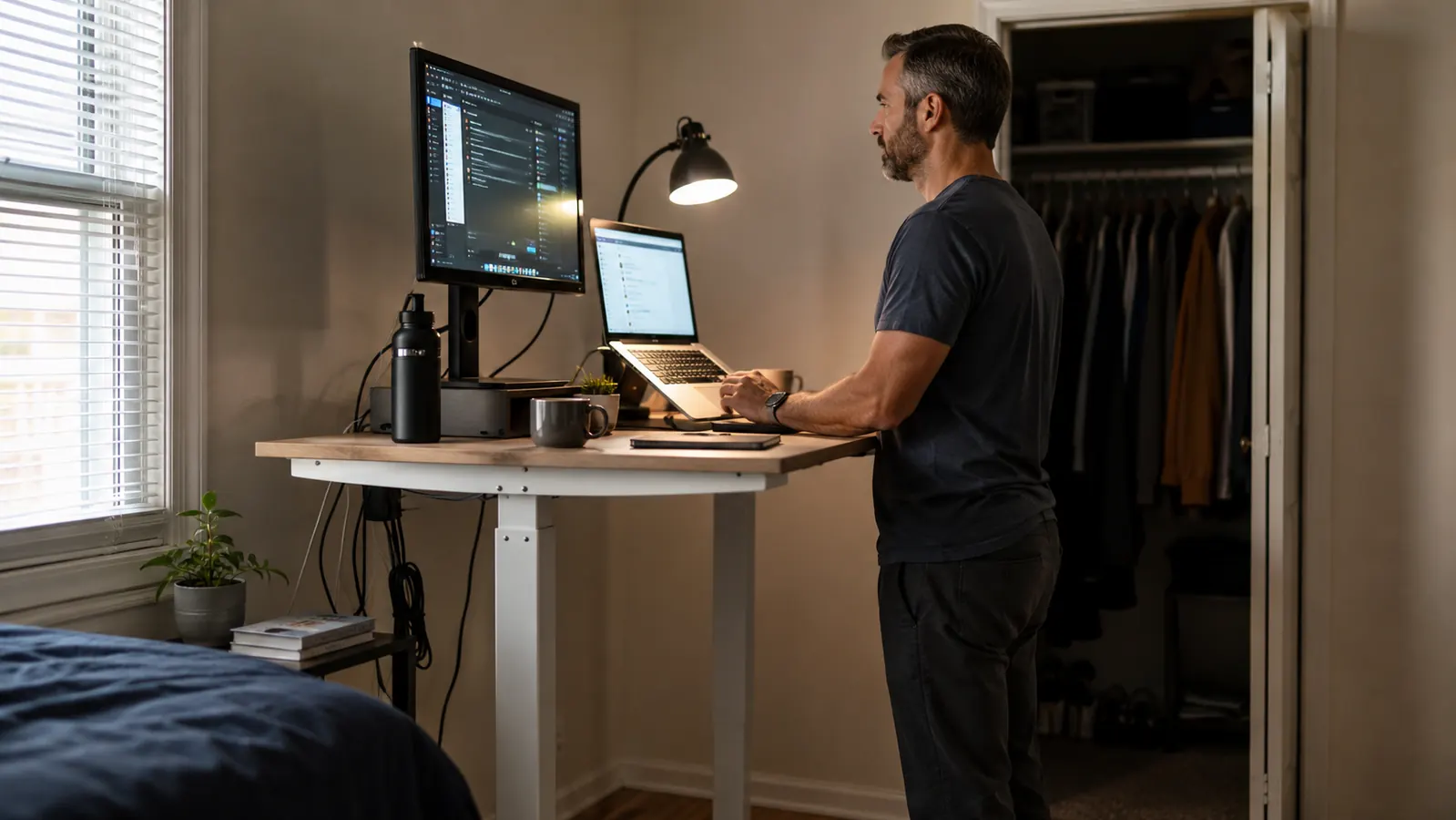
I bought my first standing desk assuming it would fix my slouch automatically, just by getting me on my feet. It didn't. For about a month I stood at that desk hunched over almost exactly the same way I used to sit, shoulders rounded forward, chin poking toward the screen, except now my feet were tired too. The desk wasn't the problem. The height was. Once I actually dialed in my FEZIBO standing desk correctly, set for my own elbow height instead of whatever felt roughly okay, the slouch backed off in about a week, not because standing is magic, but because the desk was finally supporting the posture it's supposed to instead of just giving me a taller place to hunch.
Here's what nobody tells you when you're shopping for one of these: a standing desk that's set even two inches too low or too high will pull you right back into a slouch, standing or sitting, because your body always finds the path of least effort toward whatever's in front of it. This guide is the setup I actually run, in the order I do it, on a desk that goes from sitting to standing at the touch of a button. It won't diagnose or fix a medical condition, and if you've got real pain that radiates or doesn't improve, that's a conversation for a doctor, not a blog post. This is what worked for a guy at a desk nine years running, written down in the order I learned it.
I Stood at the Wrong Height for a Month Before I Figured This Out
A standing desk only fixes slouching if it's set for your actual elbow height, not a guess. The FEZIBO's three memory presets make it easy to lock in the right height once and stop guessing every single day.
Amazon Check Today's Price on Amazon →Step 1: Find Your Correct Standing Elbow Height First
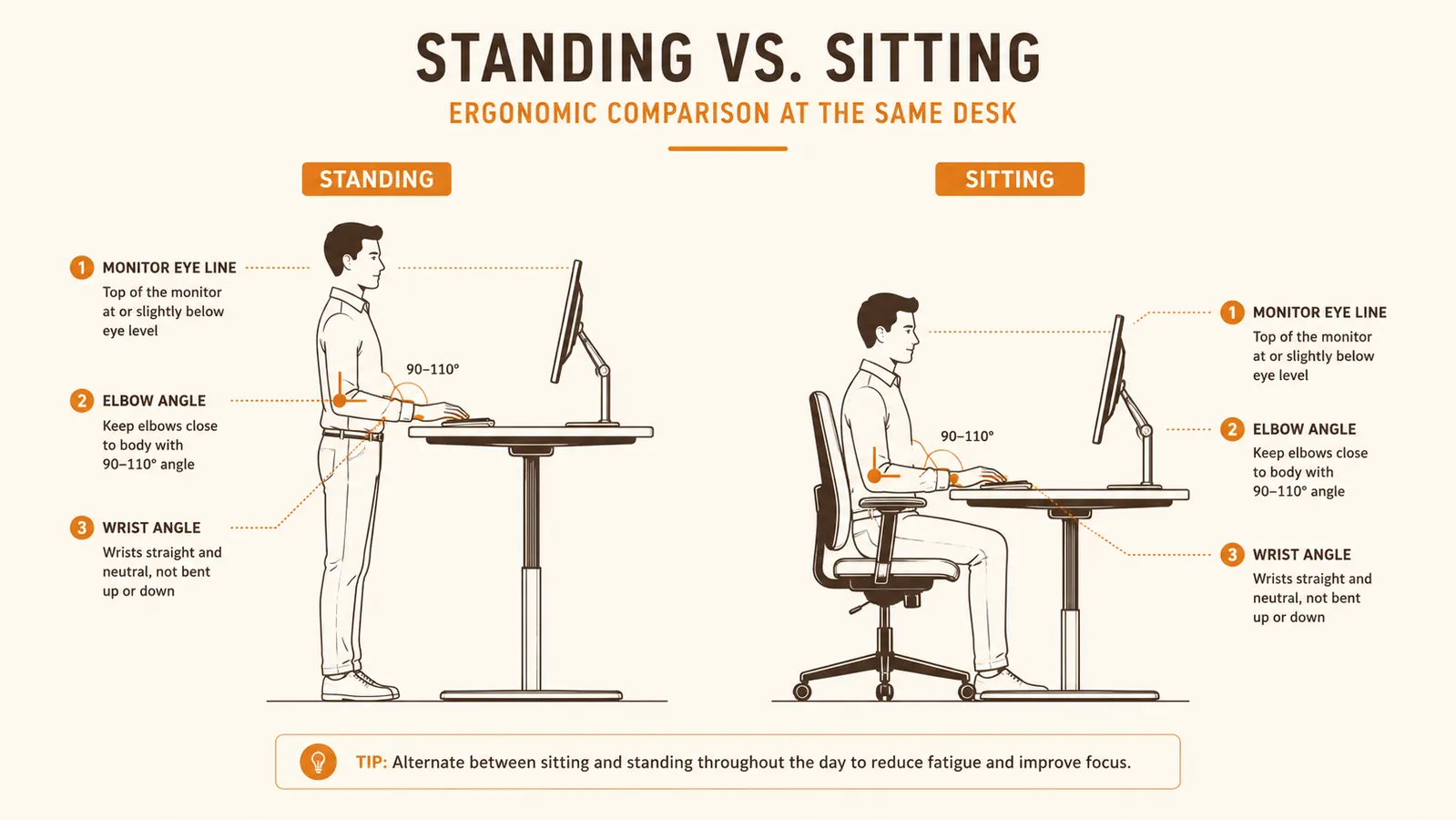
Stand up straight, let your arms hang relaxed at your sides, then bend your elbows to 90 degrees like you're about to type. Wherever your hands land, that's roughly where your desk surface should sit. Not lower, which pulls your shoulders down and forward into a rounded position, and not higher, which shrugs your shoulders up toward your ears and creates a completely different kind of tension that still ends in a slouch by mid-afternoon, just from a different direction.
I skipped this step the first time and just raised the desk until it looked about right standing next to it in the store display. That's how I ended up hunching for a month. Standing next to a desk for ten seconds tells you almost nothing about how your shoulders behave after you've been typing at it for two hours. Take the actual measurement, elbow height with relaxed shoulders, and use that number, not a guess.
The FEZIBO's electric height range covers a wide enough span that this isn't a compromise the way it would be on a fixed-height table or a stack of risers under a regular desk, which is what I tried before I upgraded. Dial the height up slowly, checking your elbow angle every few inches instead of jumping straight to a number, and you'll land on the right spot faster than you'd expect.
Weight capacity turned out to matter more than I expected here too, even though it doesn't sound like it should connect to posture at all. The frame handles a dual monitor setup, a laptop dock, and a small desk lamp without any wobble once it's at full standing height, and that steadiness matters. A desk that shakes even slightly when you type makes you tense your shoulders and lean in to brace against it, which is its own quiet path right back into a hunch. I didn't notice how much I'd been bracing against wobble on my old table until I moved to something sturdier and the tension just wasn't there anymore.
Step 2: Set Your Sitting Height Separately, Don't Guess It From Standing
A sit-stand desk only fixes slouching if both positions are actually correct, not just the standing one. Sit down in your chair with your feet flat, then lower the desk until your elbows sit at that same 90 degree angle again. This is a different number than your standing height, obviously, but I've watched people lower the desk by feel and land it two or three inches off because they're rushing to get back to work instead of taking the thirty seconds to check it properly.
Getting the sitting height wrong undoes half the point of owning a standing desk in the first place. If sitting at the desk still means reaching up for the keyboard or hunching down to see the screen, you're back to slouching for whatever portion of your day you spend seated, which for most people is still the majority of it. The desk has to work in both positions or it's only solving half the problem.
Step 3: Save Both Heights to Memory Presets and Actually Use Them
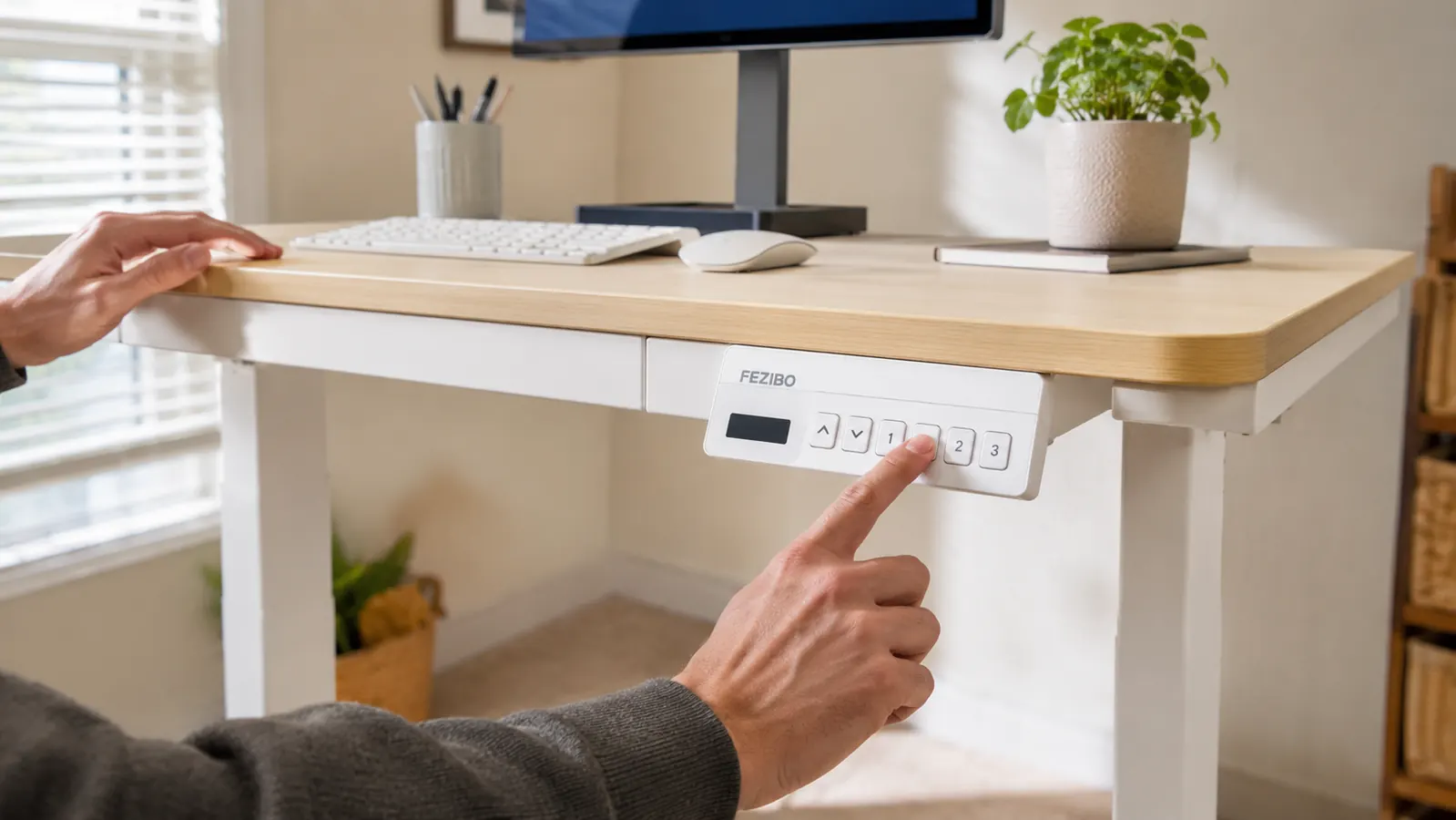
This is the step that made the whole thing stick for me. The FEZIBO has three programmable memory presets, and once I had my sitting and standing heights dialed in correctly, I saved them both so I never had to eyeball it again. Before that, switching positions meant holding a button and watching the desk creep up or down while I guessed when to let go, and on a bad day I'd just skip the switch entirely because it felt like a hassle.
Once the correct heights are one button press away, there's no excuse left to slouch through a compromise setting because adjusting feels like a chore. I press the same preset every time I stand up, and it stops in the exact spot I measured, elbows at 90 degrees, no drifting back toward whatever felt close enough that morning.
I also tested my presets under a full load, monitor arm, dual screens, laptop dock, before trusting them for daily use. A preset that's accurate empty but drifts an inch once real weight is on the desktop defeats the whole point, and a lighter table I used years ago did exactly that. The FEZIBO's presets held within what felt like a hair's width even fully loaded, which is the only reason I stopped double checking the height by eye every single morning.
If your desk doesn't have presets, at minimum mark the correct heights with a strip of tape on the leg or write the numbers down somewhere you'll actually see them. The goal is removing the guesswork every single time you switch, because guesswork is exactly how the slouch creeps back in over a few weeks without you noticing.

Step 4: Fix Monitor Height Before You Blame the Desk
A perfectly set desk height still won't fix your slouch if your monitor is sitting too low, because you'll tip your chin down and round your upper back forward to see the screen no matter how good your elbow angle is. Your eyes should land on the top third of the screen when you're looking straight ahead, not down. On a standing desk this matters even more than it did when I was sitting, because the drop from eye level to a low monitor is bigger when you're standing a foot or so higher off the ground.
I run a laptop riser under my main screen on standing days specifically because the same monitor height that worked seated left me tipping my chin down once I raised the desk. If you're using a laptop alone, prop it up and add an external keyboard rather than hunching down to the built-in screen, which is one of the most common slouch triggers I see in home offices that otherwise have a decent standing desk sitting in the corner doing half its job.
Step 5: Build the Sit-Stand Switching Habit, Not Just the Standing One
Standing all day isn't the goal, and it isn't what fixes slouching either. Staying in any single position for hours, seated or standing, eventually wins the fight against your posture no matter how correct the height is. I set a timer for every 45 to 50 minutes and switch positions using my saved presets, standing for roughly half my day and sitting for the rest, adjusted around calls and whatever I'm actually working on.
That switching habit did more for my long-term slouch than the standing desk on its own ever could. I also went back and read 10 Reasons a Standing Desk Boosts Focus a few weeks after setting mine up, mostly to see whether the concentration difference other people described matched what I was noticing, and it lined up closer than I expected. If you want the longer view on how the FEZIBO holds up under daily height changes over months rather than just the first setup, I wrote up my full long-term review covering the motor, the memory presets, and how steady the desktop stays at full height.
Some days I still catch myself leaning on one elbow or drifting forward toward the screen a few inches, standing or sitting, and that's normal. Noticing it and resetting takes a few seconds. What actually fixes the slouch is the combination of a correct height and a habit of moving between positions instead of locking into either one for an entire eight-hour day.
What Else Helps
The desk carries most of the weight here, but a few smaller things made a real difference for me too. A padded anti-fatigue mat under your feet on standing days keeps you shifting weight naturally instead of locking your knees and letting your shoulders round forward to compensate for tired feet. Shoes matter more than I expected, standing in socks on a hard floor for an hour is a fast way to start slouching just to take pressure off your feet. And keyboard and mouse placement close enough that you're not reaching keeps your shoulders from creeping forward at either height, which is a small thing that compounds badly over a full day if you ignore it.
Window glare gets worse once you start standing more, not better, because your eye line moves and catches the light at a different angle than it did seated. I didn't expect that the first week I switched over. If your monitor sits between you and a window, turn the whole desk sideways to it rather than fighting the reflection with brightness settings, which never actually solves the glare and just adds eye strain that leads straight back into the squint-and-lean posture you're trying to get rid of.
Cable mess is the other thing I underestimated. A desk that moves up and down needs slack in the cables or you'll end up hunching sideways to avoid yanking a cord loose, which is its own weird little slouch nobody warns you about. I ran a cable sleeve down one leg of the desk so everything moves with it instead of catching, and stopped thinking about it entirely after that.
Standing at the wrong height is just a slouch with better circulation.
Still Slouching at a Desk That Doesn't Move?
Nine years at a spare-bedroom desk taught me the height matters more than whether you're sitting or standing. The FEZIBO's three memory presets are the reason mine actually gets used correctly every single day.
Amazon See Current Price on Amazon →