

I clamped an Airlonv LED desk lamp to the right edge of my desk back in early spring, right as the days started getting shorter on the evening end and I found myself typing well past sunset more nights than not. I'd been working under a single ceiling fixture in my spare bedroom for years, the kind of flat overhead light that makes a monitor screen look like a mirror the second the sun goes down. I bought the Airlonv mostly to fix that glare, and I kept using it through a full season of evening work sessions instead of writing this up after the first week the way a lot of lamp reviews do.
This isn't a quick unboxing. It's what happened after four months of nightly use in a small home office: whether the clamp stayed tight, whether the dimming memory actually remembered anything, and whether the glare across my monitor got better or just moved somewhere else. I've got specific complaints and specific praise, and I'll try to keep the two separated so you can weigh them against your own setup.
The Quick Verdict
After a full season of nightly use, the Airlonv still holds its brightness setting reliably and the clamp hasn't budged, but the touch controls have gotten less responsive and the color temperature memory occasionally resets on its own.
Amazon Check Today's Price →Still working under a ceiling light that turns your monitor into a mirror at night?
That was my exact problem before this lamp. A season in, it's still the first thing I click on when the sun goes down. Check today's price and current availability before you decide.
Amazon Check Today's Price on Amazon →How I've Used It
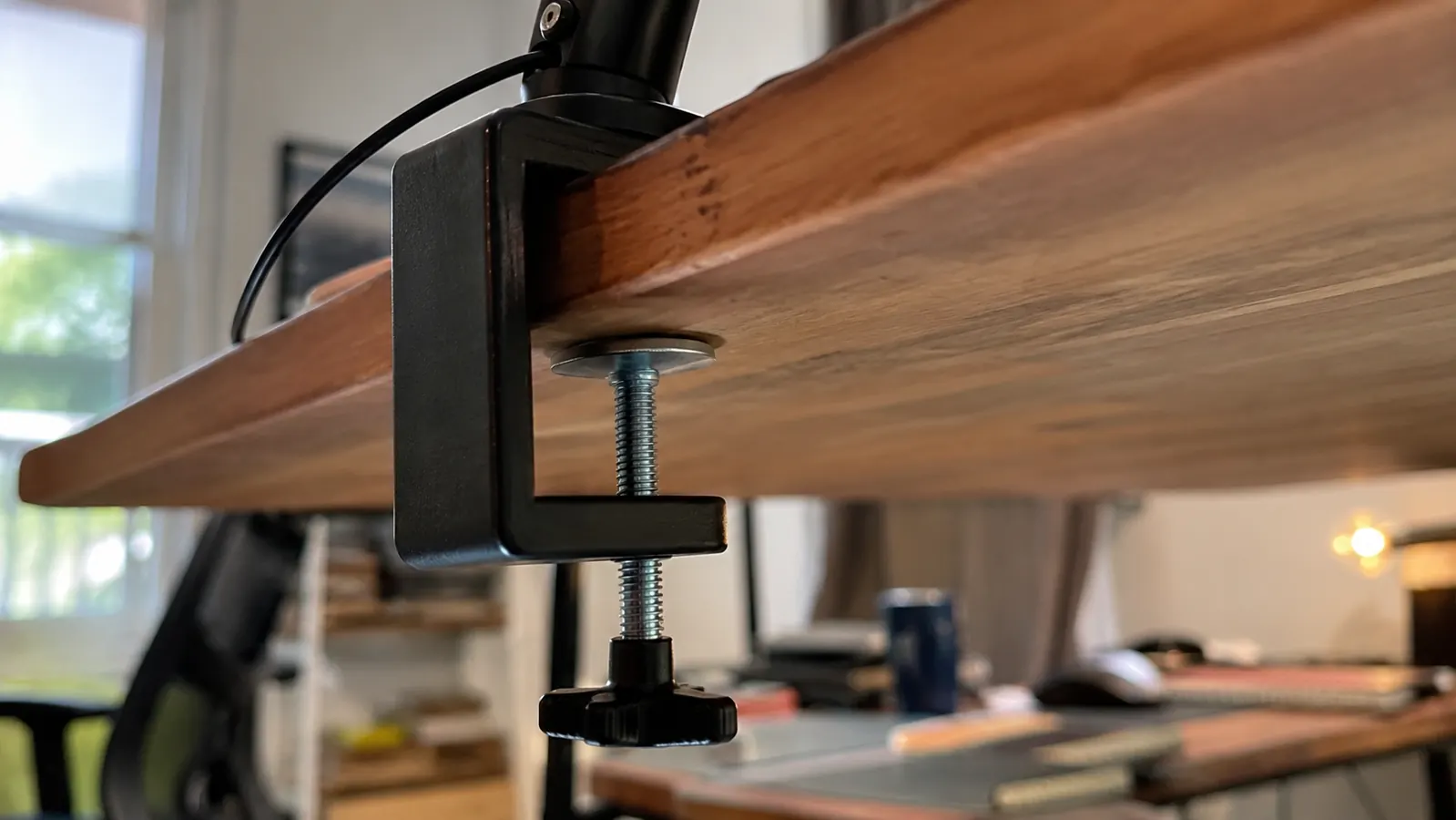
Setup took about five minutes. The Airlonv clamps to the desk edge with a screw-tightened bracket, and my desk is a standard 1-inch-thick laminate top, which the clamp fit without any issue. I positioned the base far enough back that the gooseneck arm could swing over my keyboard and land the light pool just above where my hands sit, angled slightly toward the wall so it wouldn't hit the monitor glass directly. That angle took some trial and error the first week, more on that later, but once I found it I haven't had to touch the physical position of the arm since.
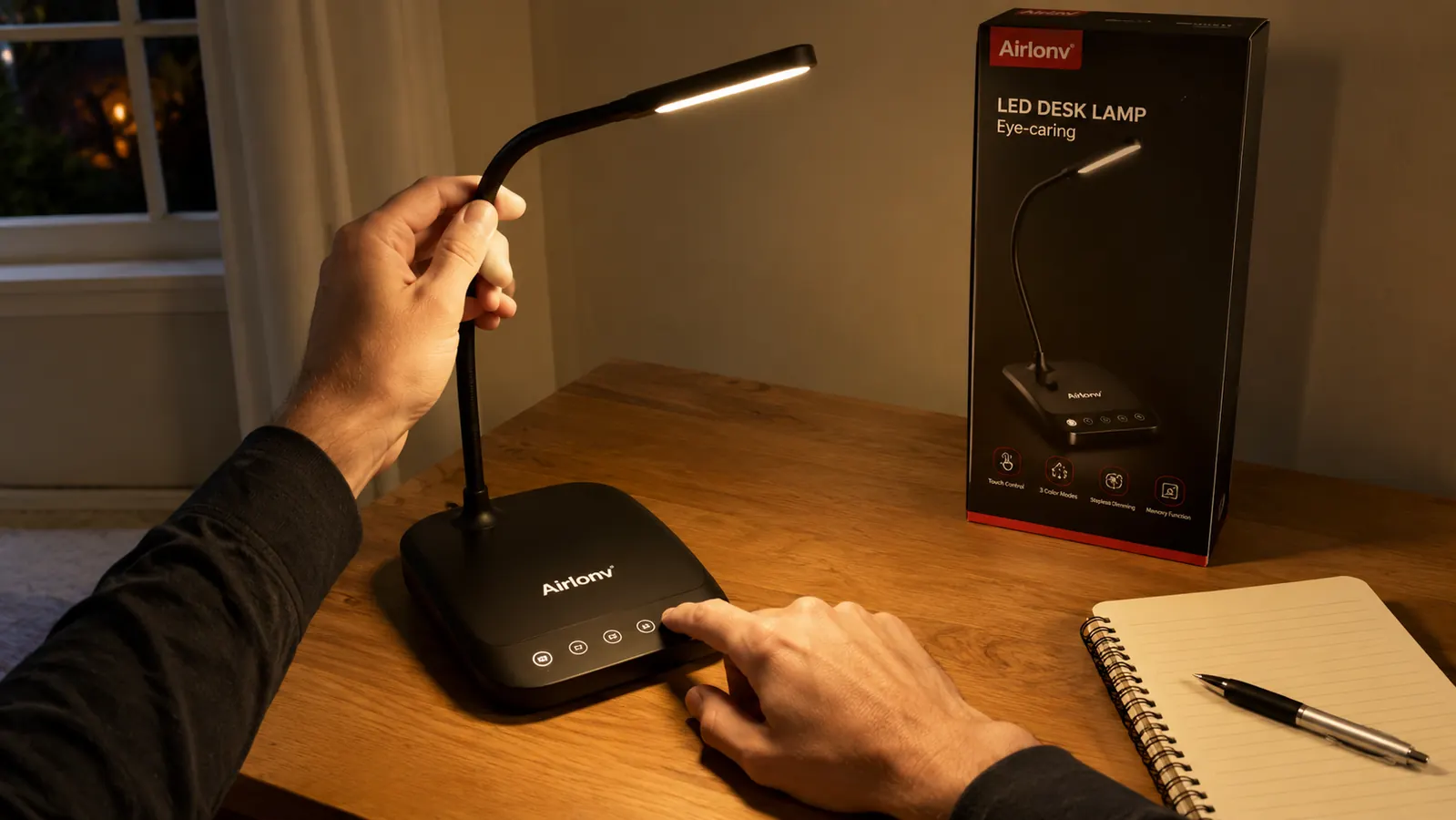
I use this lamp almost every evening from around six to whenever I close my laptop, which some nights is eight and some nights is closer to eleven if I'm behind on a project. Over a full season that's easily four to five nights a week, sometimes all seven. I keep it on the warmer end of the color range, somewhere around 3000K, for most of that stretch, and I bump it up toward the cooler daylight setting on the rare mornings I use it as a fill light for a video call. The touch panel on the base lets you cycle through color temperatures and step through five brightness levels, and I settled into a routine of tapping it once when I sit down and mostly leaving it alone.
The stepless dimming is the feature that sold me in the listing, and it's held up the way I hoped. Instead of jumping between five hard-set brightness levels, you can hold the touch panel and slide the light up or down smoothly, which matters more than it sounds like it would. On nights when I'm still working at eleven and my eyes are already tired, dropping the brightness down a notch without stepping through a harsh jump has made a real difference in how strained I feel by the time I actually stop.
I also moved the Airlonv from its original spot once, about six weeks in, when I rearranged the desk to fit a second monitor stand on the left side. Unclamping it and remounting it on the opposite corner took less than a minute, and the arm still holds the same range of motion it had on day one, which told me the clamp mechanism isn't fussy about being repositioned. That's worth knowing if you rearrange your desk the way I do every few months instead of settling on one permanent layout.
What Held Up and What Changed After a Full Season
This is the part most lamp reviews skip, because most get written after a week when everything still feels new. The clamp is the first thing I checked, since that's the part I expected to loosen given how many cheap desk accessories I've owned that worked their screws loose over time. Four months in, I've had to re-tighten it exactly once, in week six, and it's held firm since. That's a better track record than the monitor arm clamp I reviewed separately, which needed attention almost monthly.
The gooseneck arm is where I've noticed the most wear. It still holds whatever angle I set it to, but the resistance has softened slightly compared to when it was new. In the first month, repositioning the arm took a firm push. Now it moves with noticeably less effort, which isn't a problem yet, but I can see it eventually drifting on its own if that trend continues into another season. I haven't had it sag under its own weight so far, so I'm not worried, just noting it.
The touch controls are my honest disappointment. In month one, a single tap reliably cycled brightness or color temperature. By month three, I'd started needing two or three taps some evenings before the panel registered anything, especially on the brightness step-through. It's not broken, and the stepless dimming slider still works fine when I hold and drag, but the discrete tap function has gotten noticeably less crisp than it was out of the box.
The finish on the base has also picked up a light film of dust and skin oil where I tap it most often, right near the power button. A quick wipe with a microfiber cloth every couple of weeks keeps it looking presentable, and the matte black coating hasn't shown any scratches from my fingernails, which is more than I can say for a phone stand I bought around the same time. Cosmetically, four months of nightly handling has aged it about as gracefully as I could ask for at this price.
Whether the Dimming Memory Actually Held
The Airlonv is supposed to remember your last brightness and color temperature setting when you turn it back on, and for most of the season that's exactly what it's done. I leave it on my preferred warm, medium-low setting most nights, and it comes back to that setting the next evening without me touching anything. That consistency is genuinely useful when you're not in the mood to fuss with a lamp before you've even opened your laptop.
Where it's let me down is after a power interruption. My house lost power twice this season during storms, and both times the Airlonv came back on at a default brightness and neutral color temperature instead of whatever I'd left it on. It's a minor annoyance, maybe fifteen seconds of retapping the panel to get back to my preferred setting, but if you're expecting the memory to survive an outage the way some smart devices do, it doesn't. I'd call this a small gap rather than a real flaw, since most nights power stays on and the memory does exactly what it should.
I also tested what happens with a simple unplug versus a wall switch, since my desk power strip has an on-off toggle I use nightly instead of leaving everything drawing power around the clock. Flipping that switch off and back on hasn't caused the same reset the storm outages did, so the memory seems to hold through a normal nightly shutdown just fine. It's specifically the harder, unplanned power loss that wipes the setting, not everyday use.
Glare Across the Monitor Over Time
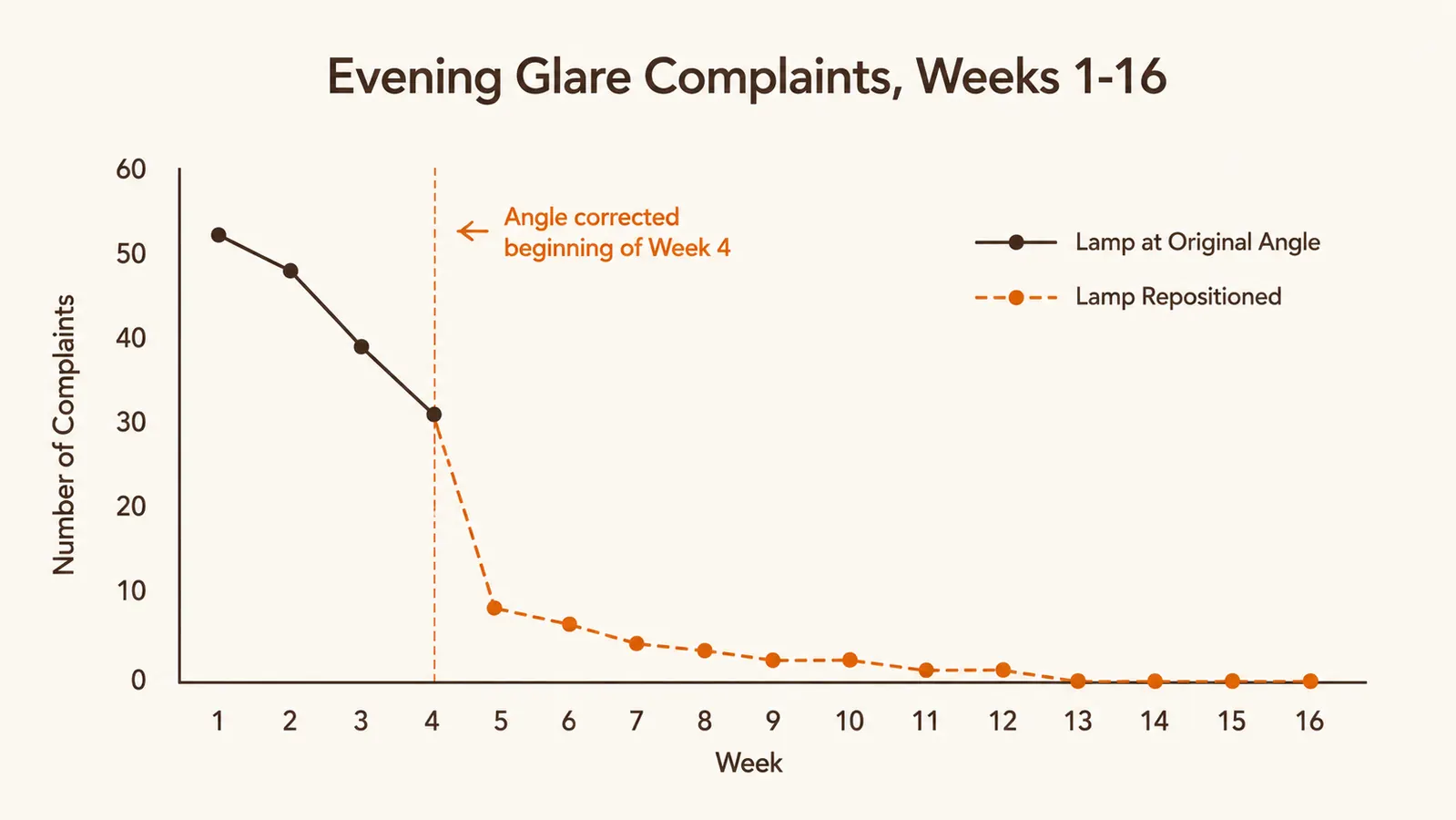
This was my whole reason for buying the lamp, so I tracked it more carefully than I'd normally bother to. In the first two weeks, I actually made the glare situation worse by mistake. I had the gooseneck angled slightly toward my monitor to light up my notes, and the reflection off the screen at night was almost as distracting as the bare ceiling fixture had been. It took me embarrassingly long to figure out that the fix wasn't dimmer light, it was a different angle entirely.
Once I repositioned the head to point down and slightly away from the screen, aimed more at the keyboard and desk surface than anywhere near eye level, the glare dropped off almost completely. I still get a faint reflection in the very bottom corner of my monitor on the darkest nights, but it's nothing close to the mirror effect I had before. If you buy this lamp expecting the glare problem to solve itself out of the box, budget a first week of trial and error on the angle. Mine didn't fix itself until I actually moved the head.
The 360-degree gooseneck is what made that adjustment possible without buying a different lamp or repositioning my whole desk. I've since nudged the angle two more times over the season, mostly seasonal, since the room gets darker earlier as we move deeper into fall and I want slightly more spread across the desk surface rather than a tight pool of light.
Flicker and Eye Comfort During Long Evening Sessions
I'm sensitive to flicker, the kind of cheap LED strobe that gives me a headache within an hour even if I can't consciously see it flickering. I tested the Airlonv against my phone camera in slow-motion mode the first week, the trick a lot of people use to catch flicker a camera sensor picks up before your eyes do, and didn't see any banding at any of the five brightness steps. Across a full season of two-to-four-hour evening sessions under it, I haven't had the specific headache-behind-the-eyes feeling that cheap desk lamps have given me in the past.
That said, I'm not going to claim it cured every bit of end-of-day eye fatigue, because a lot of that comes from screen time itself, not the ambient lighting. What I can say honestly is that on nights I forget to turn the Airlonv on and just work under the overhead ceiling light out of habit, I notice the difference by nine o'clock. My eyes feel more tired working under the flat overhead light than they do under this lamp's warmer, more directional glow. One thing I didn't expect: on the coldest nights this season, when the furnace kicks on and the room's overall light feels dimmer somehow, the Airlonv's warm setting has made the whole room feel less sterile than the bare ceiling bulb ever did, which is a small comfort thing more than a functional one, but it's added up over four months of sitting at this desk after dark.
What I Liked
- Clamp has stayed tight through a full season with only one re-tightening
- Stepless dimming slider still works smoothly and made late-night sessions noticeably easier on my eyes
- No detectable flicker at any brightness level, even tested in slow motion
- 360-degree gooseneck let me actually fix my early glare mistake without buying a new lamp
Where It Falls Short
- Touch panel taps have gotten less responsive over the season, sometimes needing two or three presses
- Dimming and color memory resets to default after a power outage instead of holding your last setting
- Gooseneck resistance has softened slightly and may loosen further with more use
- Takes real trial and error on angle before the glare problem actually goes away
The glare didn't disappear until I stopped blaming the lamp and started blaming the angle. A season in, that ten-minute fix has held for months.
Who This Is For
If you work evenings under a flat overhead light and haven't isolated a task light to your actual desk surface, this is the fix I'd point you toward. The stepless dimming and warm color range make a real difference across long sessions, and the clamp is sturdy enough that I don't think about it once it's mounted. If you want more background on why a dedicated lamp beats overhead lighting for eye strain in the first place, I put together a longer breakdown here: 10 reasons a desk lamp reduces eye strain at a home office desk.
Who Should Skip It
If you're someone who leans on quick single-tap brightness changes throughout the day rather than setting it once and leaving it, the touch panel's slower response after a few months of use will bother you more than it's bothered me. And if your area loses power often, the lack of memory retention through an outage is worth knowing about going in. I go into more of the small quirks I didn't expect, including a few things that only showed up after the first month, in the companion piece: the honest Airlonv review covering setup and what nobody mentions. Weigh that against how many nights a week you'll actually use it after dark. For me, at four to five nights a week over a full season, the tradeoff has still been worth it.
A season of evening sessions later, this is still the first thing I turn on at dusk.
That's the actual test for a desk lamp. If it's still part of my routine after the new-purchase excitement wore off months ago, it earned its spot on my desk. Check today's price on Amazon before it changes.
Amazon Check Today's Price on Amazon →